
SPECIES INDEX
Why Do Cormorants Spread Their Wings to Dry?
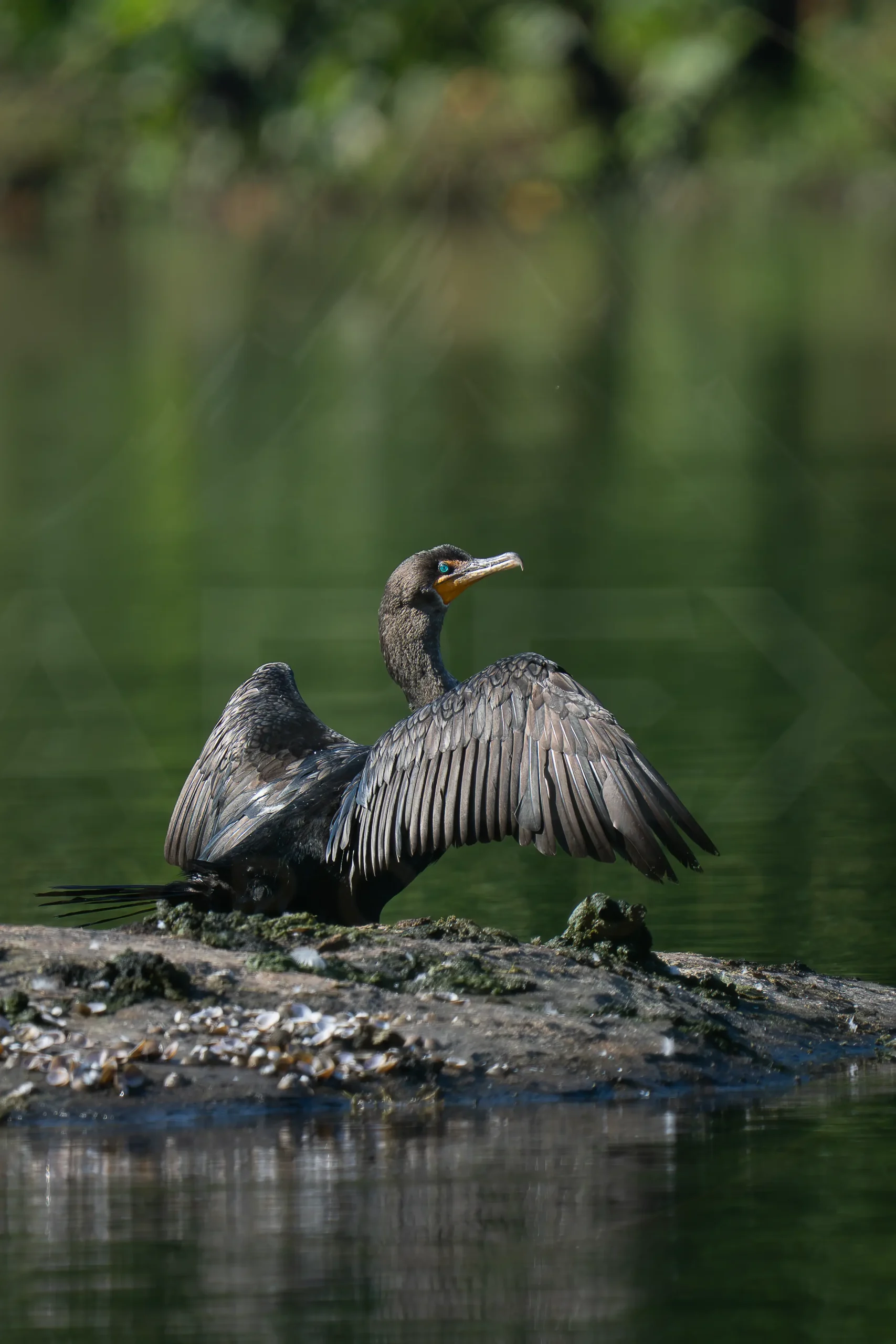
Cormorants produce far less preen oil than most waterbirds, so their feathers soak through instead of shedding water — a trade-off that actually helps them dive deeper by keeping air bubbles from getting trapped in the plumage. The catch is they have to dry out afterward, which is exactly what we caught this one doing at Saluda Riverwalk, wings held fully open on a riverside rock after a swim.
Identification
A large, entirely black waterbird, 28–35 inches long with a wingspan around 45–50 inches, marked by a bare patch of orange-yellow skin on the face and a hook-tipped bill. During breeding season, adults grow the double tuft of black (and sometimes white) feathers on the head that gives the species its name.
Call
A deep, guttural grunt, mostly heard around nesting colonies rather than in flight or while fishing alone.
Habitat & Range
Double-crested cormorants range across North America, from the Aleutian Islands in Alaska down through Florida and Mexico, favoring coastlines, rivers, and lakes with exposed perches nearby for drying. The rocky stretch of the Lower Saluda River at Saluda Riverwalk in Columbia, South Carolina, offers exactly that combination of fishing water and open perch space.
Diet & Hunting
Fish make up the bulk of the diet, supplemented occasionally by amphibians, crustaceans, and insects. Cormorants hunt by diving from the surface and pursuing prey underwater, reaching depths of roughly 5–25 feet on a single dive.
Nesting & Reproduction
Highly social, double-crested cormorants nest in colonies, building stick nests in trees, on cliff ledges, or directly on the ground on predator-free islands. Colonies can grow large, with many pairs nesting close together in the same trees or rock outcrops.
Conservation Status
Listed as Least Concern by the IUCN Red List. Populations crashed in the mid-20th century due to DDT-related eggshell thinning, then recovered strongly after the pesticide’s 1972 U.S. ban — in some areas so successfully that the species is now managed as a fisheries and colony-density concern rather than a conservation one.
Photographed by Apex Exposure Media
Locations Documented
Apex Exposure Media has documented the double-crested cormorant at the following location(s). This list will grow as new sightings are added.
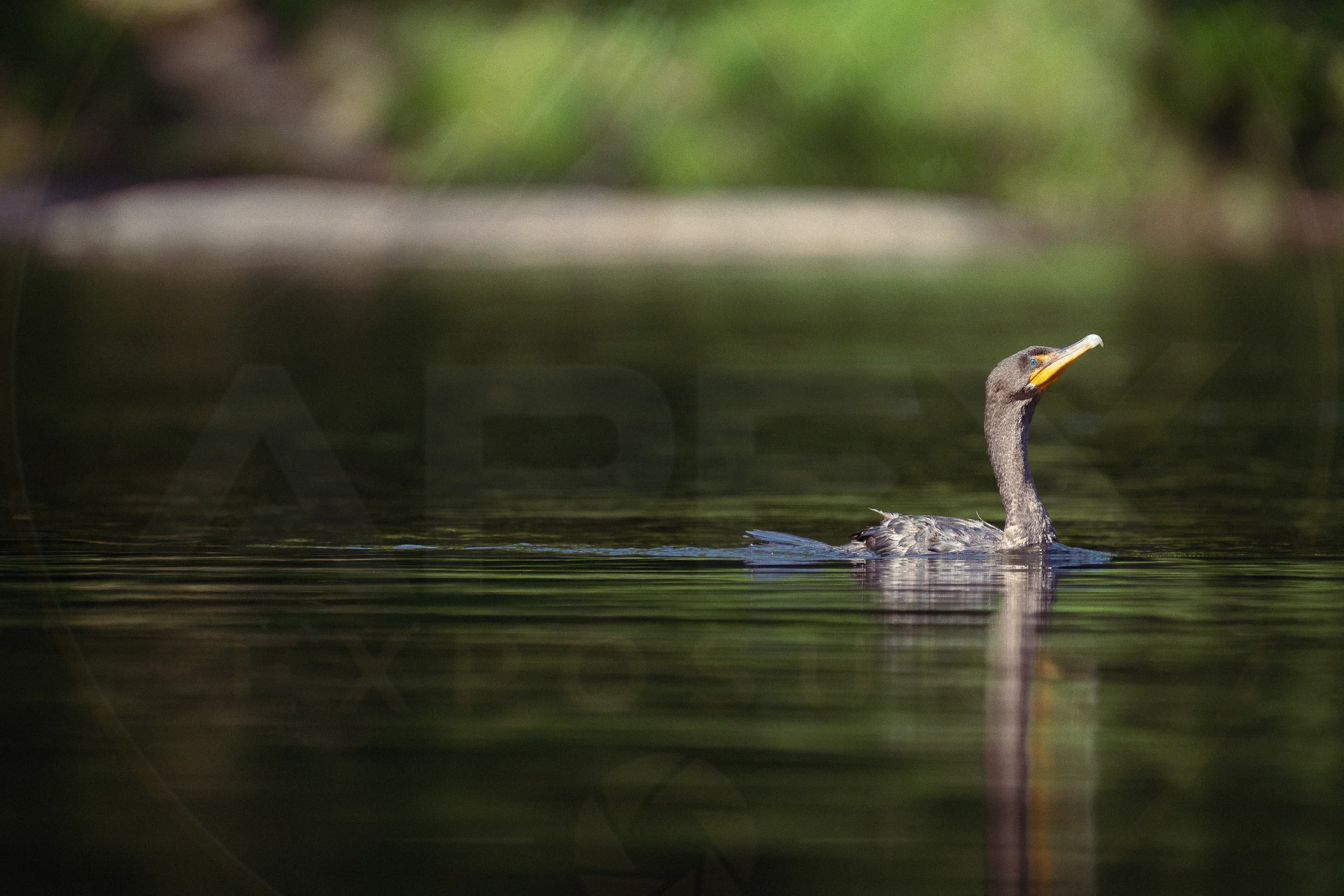
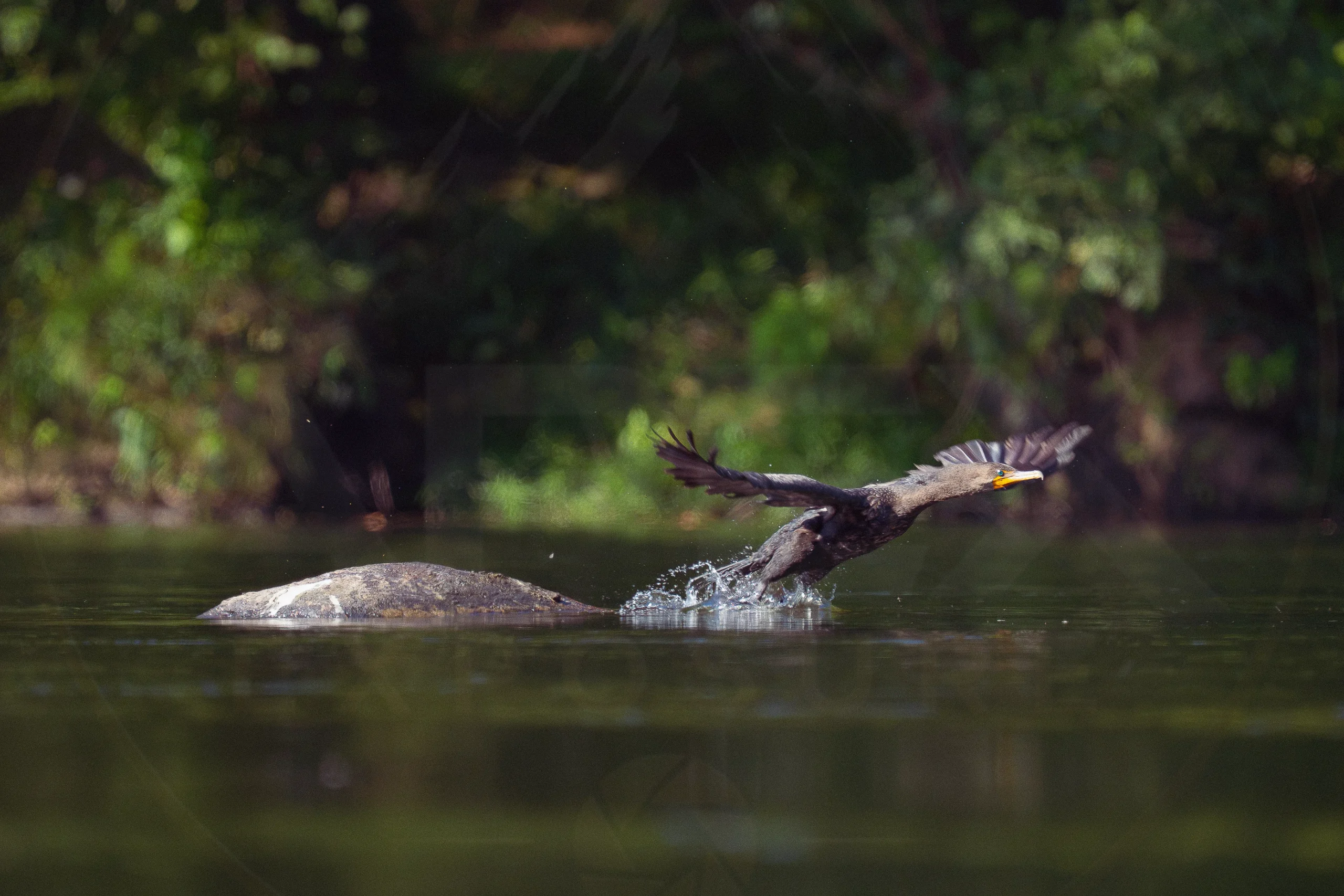
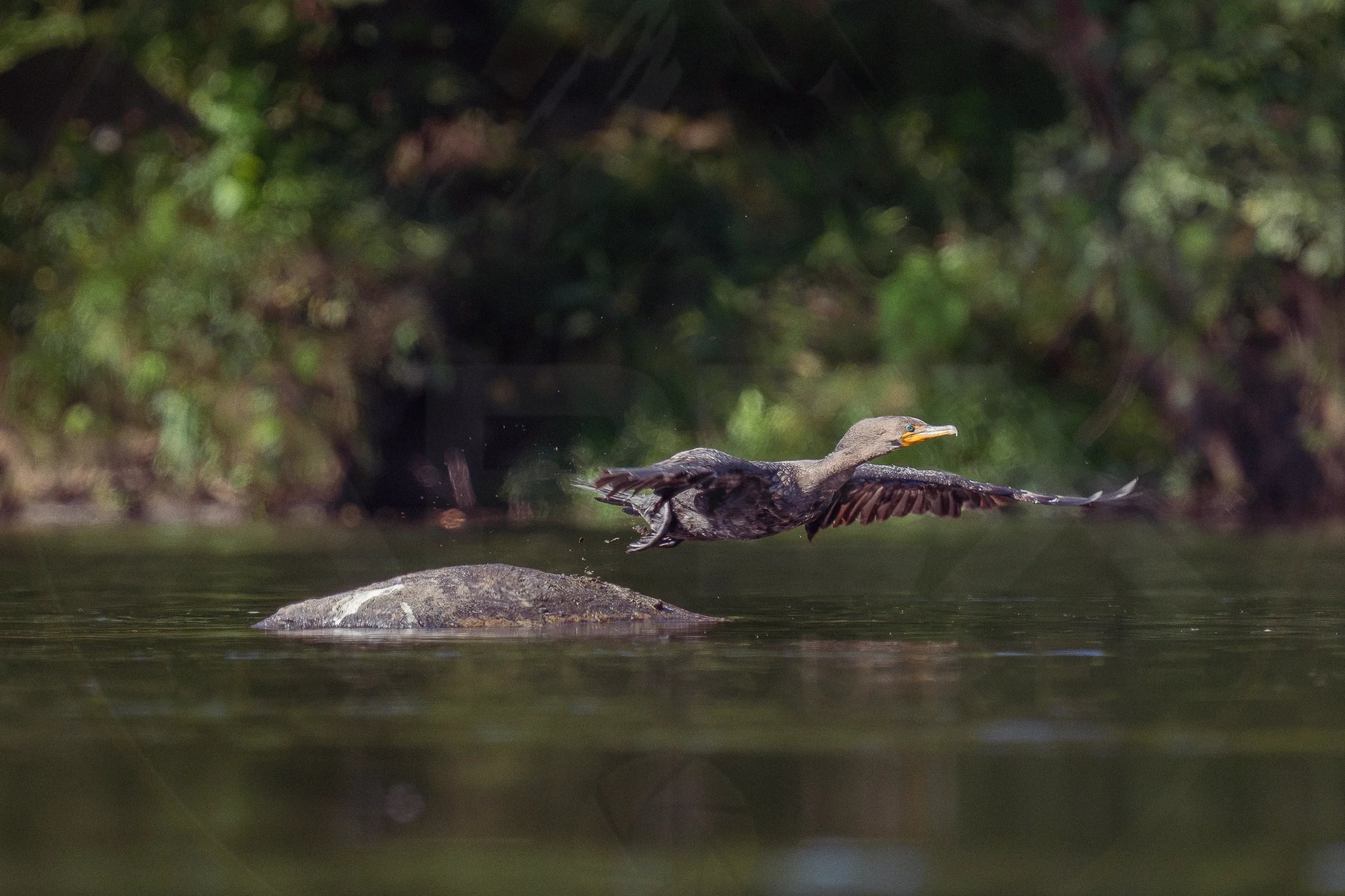
- Saluda Riverwalk, Columbia, South Carolina — swimming, drying its wings, and taking flight from riverside rocks.