
SPECIES INDEX
Mallard
Anas platyrhynchos
Identification
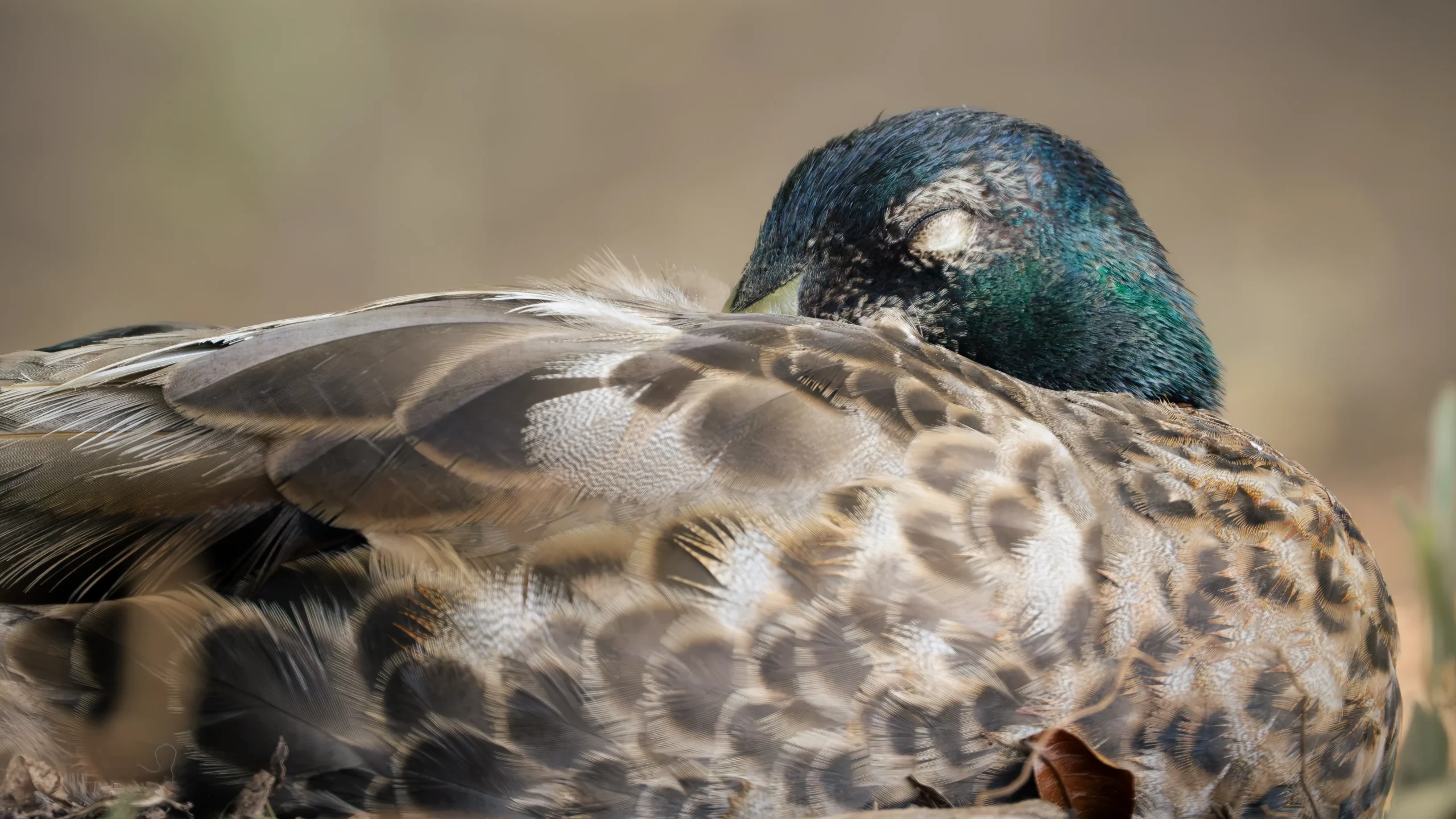
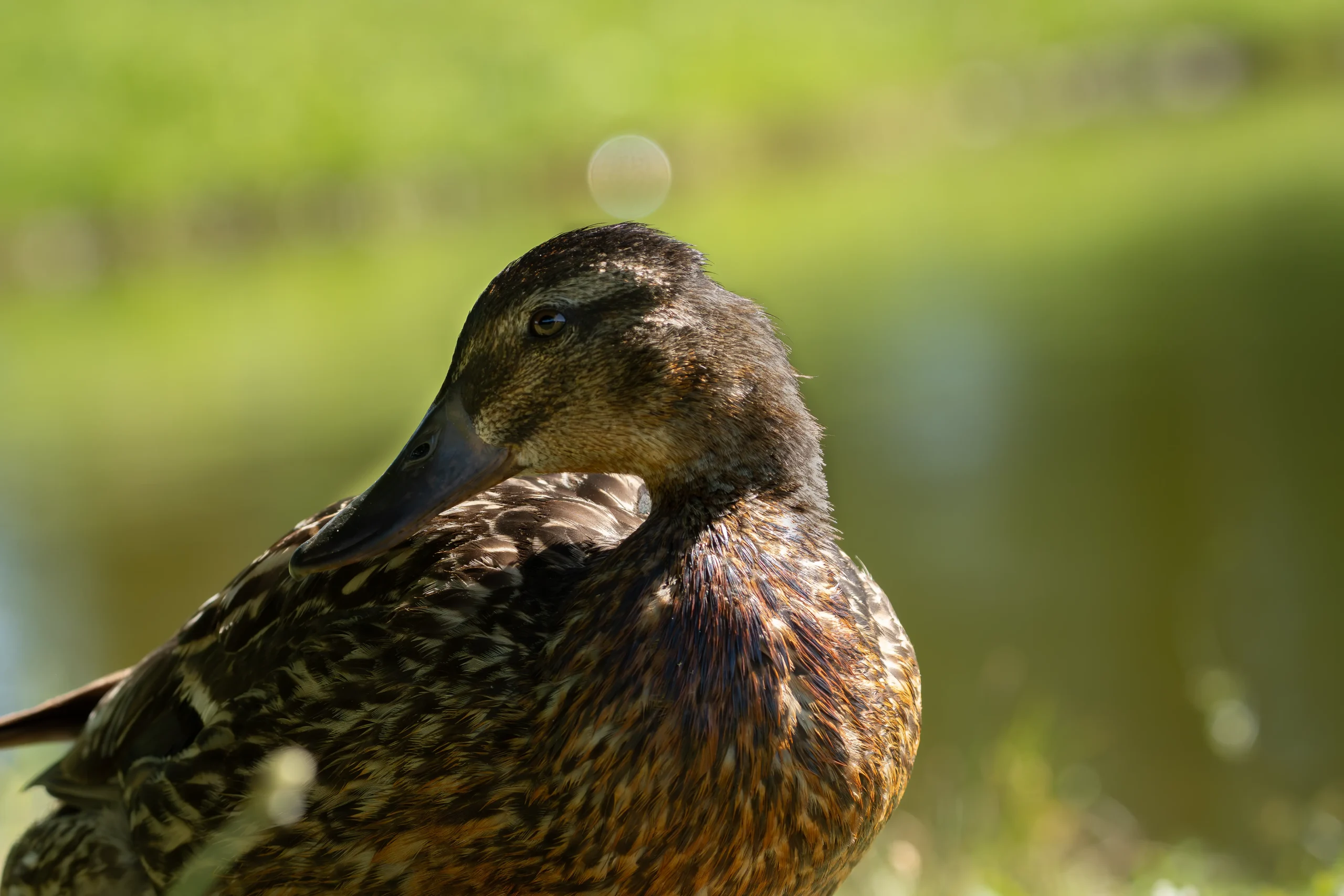
Male and female mallards look strikingly different. Drakes have an iridescent green head, a yellow bill, a crisp white neck ring, a chestnut-brown breast, and a small curled black tail feather. Females are mottled brown overall with an orange-and-black bill — camouflage that helps conceal them on the nest. Both sexes share a distinctive blue wing patch (speculum) bordered by white, visible at rest or in flight.
Call
The classic descending “quack-quack-quack” most people picture when they think of a duck actually comes from the female. Males have a quieter, raspier call by comparison.
Habitat & Range
One of the most widespread and adaptable ducks in the world, found on almost any body of water — ponds, lakes, rivers, and urban parks — across North America, Europe, and Asia. Northern populations migrate south for winter, while many southern populations, including much of South Carolina’s, are year-round residents.
Diet & Foraging
Mallards are opportunistic omnivores, eating aquatic vegetation, seeds, grains, insects, and small invertebrates. They’re dabbling ducks, feeding at the surface or tipping tail-up to reach food just underwater, rather than diving fully like a cormorant.
Nesting & Reproduction
Females build a hidden ground nest in vegetation, usually near water, and incubate a clutch of 8–13 eggs alone. Ducklings are precocial, able to leave the nest, swim, and feed themselves within about a day of hatching.
Conservation Status
Listed as Least Concern, with one of the largest and most stable populations of any waterfowl species globally. The mallard is also the wild ancestor of nearly all domestic duck breeds — a genetic legacy that creates a real conservation complication elsewhere, since domestic and feral mallards can hybridize with and genetically swamp closely related wild species, such as the American black duck.
Photographed by Apex Exposure Media
Locations Documented
Apex Exposure Media has documented the mallard at the following location(s). This list will grow as new sightings are added.
- Gibson Pond Road, Lexington, South Carolina — both a male and female resting nearby one another.