
SPECIES INDEX
Prothonotary Warbler
Protonotaria citrea
Identification
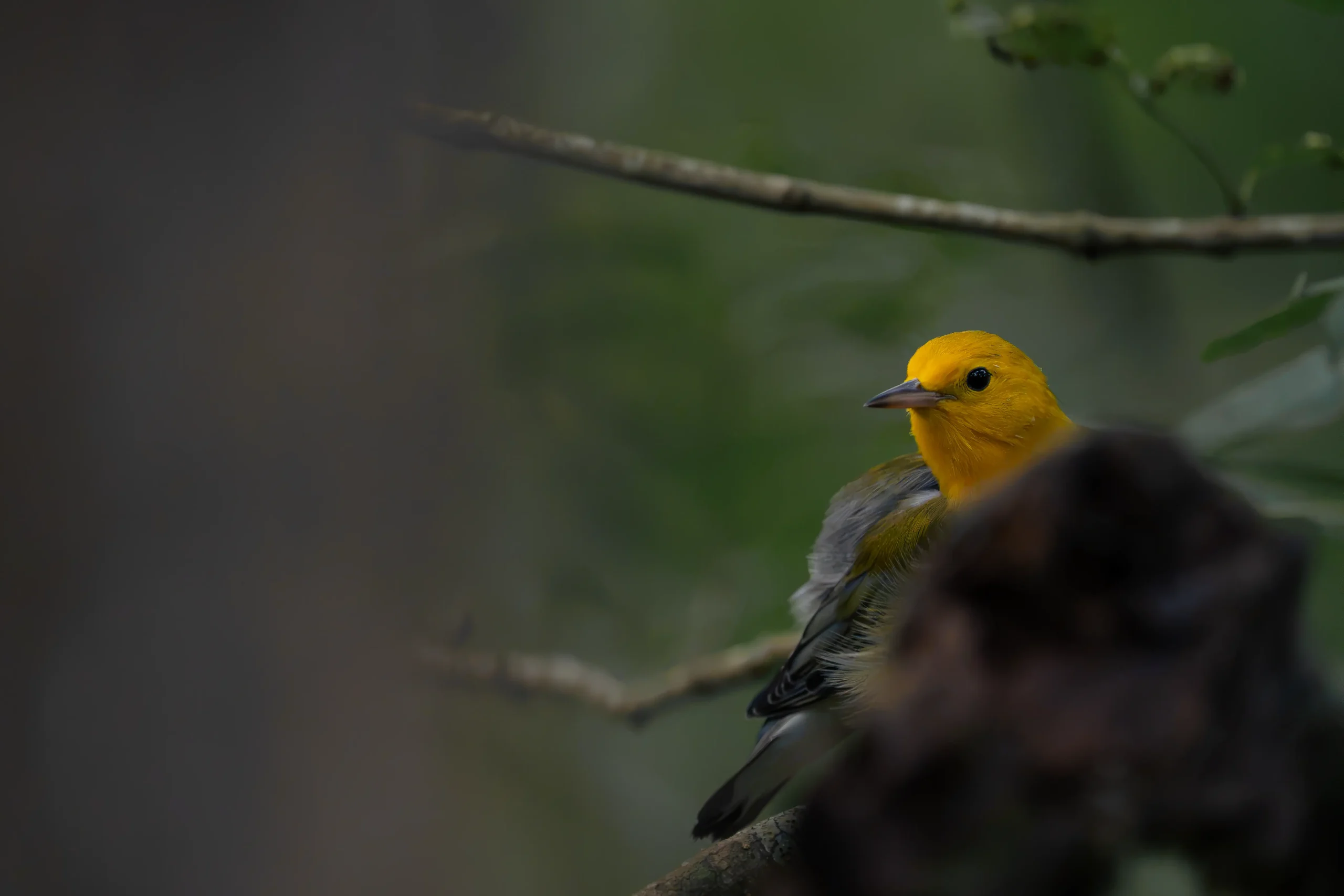
Sometimes called the “swamp canary,” the prothonotary warbler is hard to mistake for anything else in a Southern bottomland forest — a brilliant golden-yellow head and breast against blue-gray wings, especially striking against the dark, still water it often forages near.
Why Is It Called the Prothonotary Warbler?
Birders also know this species by its folk names — swamp canary and golden swamp warbler, an older common name still used in field guides — both earned by that solid-yellow head and chest glowing against dark, wet woods. The formal name traces back to the Catholic church: a prothonotary was a senior notary whose robes were dyed that same bright yellow, and early naturalists thought the bird looked like it was wearing them. The story is repeated in nearly every field guide, though it is usually presented as a traditional explanation rather than a documented one.
A Cavity-Nesting Warbler
It’s one of only a small handful of North American warblers that nests in tree cavities rather than building an open cup nest — a trait shared with very few other warbler species, and one that ties it closely to standing deadwood in flooded forest.
Habitat & Range
Tightly tied to flooded bottomland forests and swamps — habitat like Congaree’s floodplain forest is close to ideal. It’s a summer migrant in South Carolina, arriving to breed in wooded swamps before heading to Central and South America for the winter. Because of how specifically it depends on healthy bottomland hardwood habitat, it’s considered an indicator species: where prothonotary warblers are doing well, the swamp forest generally is too.
Diet & Foraging
Insects and spiders make up the diet, gleaned from foliage, bark, and often from just above the water’s surface in the flooded forest it favors.
Nesting & Reproduction
Nests in natural cavities or old woodpecker holes in dead or dying trees standing in or near water, and will also readily use nest boxes placed over swamps — one of the few warblers that responds well to artificial cavities, which has made it a useful species for targeted conservation programs.
Conservation Status
Listed as Least Concern by the IUCN, but with a population that has declined in parts of its range due to loss of bottomland hardwood forest and swamp habitat — exactly the kind of habitat its status as an indicator species is meant to flag.
Photographed by Apex Exposure Media
Locations Documented
Apex Exposure Media has documented the prothonotary warbler at the following location(s). This list will grow as new sightings are added.
- Congaree National Park, South Carolina — foraging in the shaded bottomland forest understory.