
FIELD JOURNAL • JULY 13, 2026
Exploring Congaree National Park
Three hours beneath the canopy of Congaree National Park gave us our first opportunity to fully combine wildlife photography and cinematic filmmaking during the same outing.
We followed the boardwalk toward the River Trail at Congaree National Park without a target species or planned encounter. The goal was simply to explore, pay attention, and document whatever the forest revealed.
Congaree National Park: A New Direction in the Field
On July 13, 2026, we set out for Congaree National Park without a target species or a particular photograph in mind. The goal was simply to explore and begin putting a new approach into practice — one that treated photography and filmmaking as two parts of the same adventure rather than separate projects.
We entered the park under bright summer sun, carrying the Sony a6700 with the Sony FE 200-600mm lens and the Canon EOS R7 with the RF 100-400mm lens. Between us, we also carried a tripod and a monopod. The day was hot and humid, and once we moved beneath the canopy, the light became less predictable. Sunlight pushed through openings in the trees while other parts of the forest remained deep in shadow, forcing us to adjust constantly as we moved.
Our route took us along the elevated boardwalk, onto the River Trail, and eventually back to the boardwalk for the walk out. We spent about three hours in the park, taking our time and watching the forest at every level. Wildlife could appear beneath the leaves at our feet, move through the understory beside the trail, or remain almost completely hidden in the canopy above us.
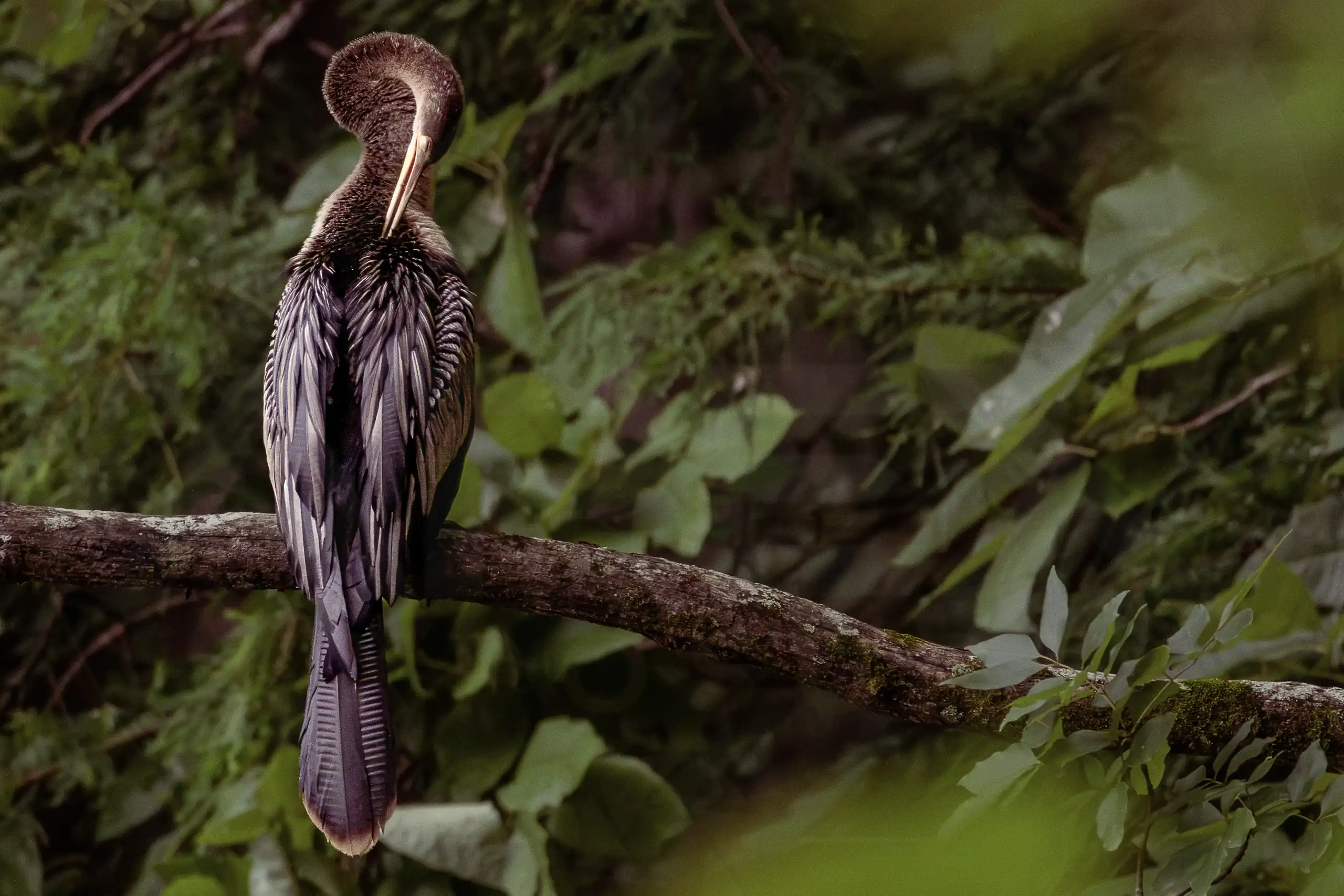
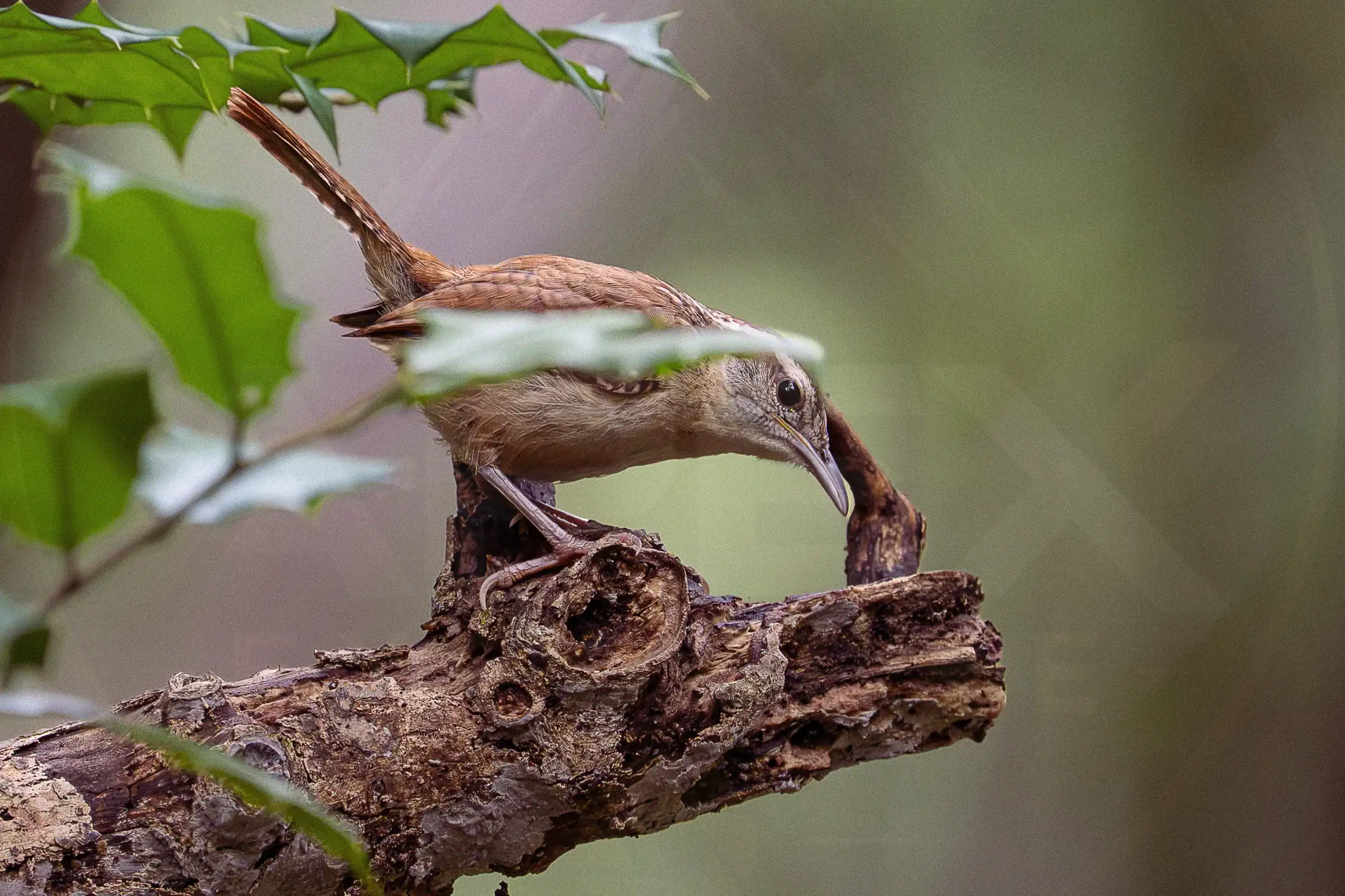
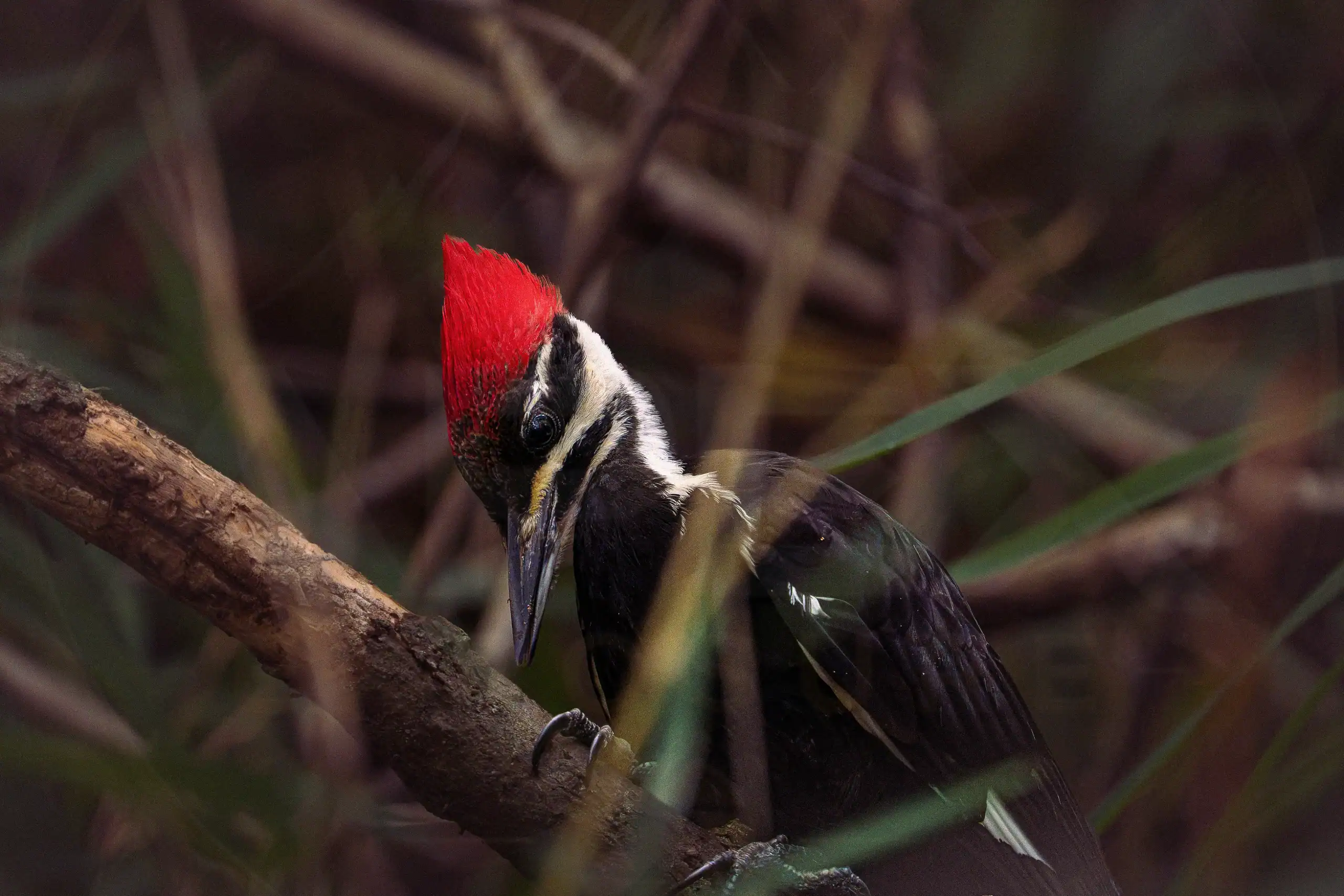
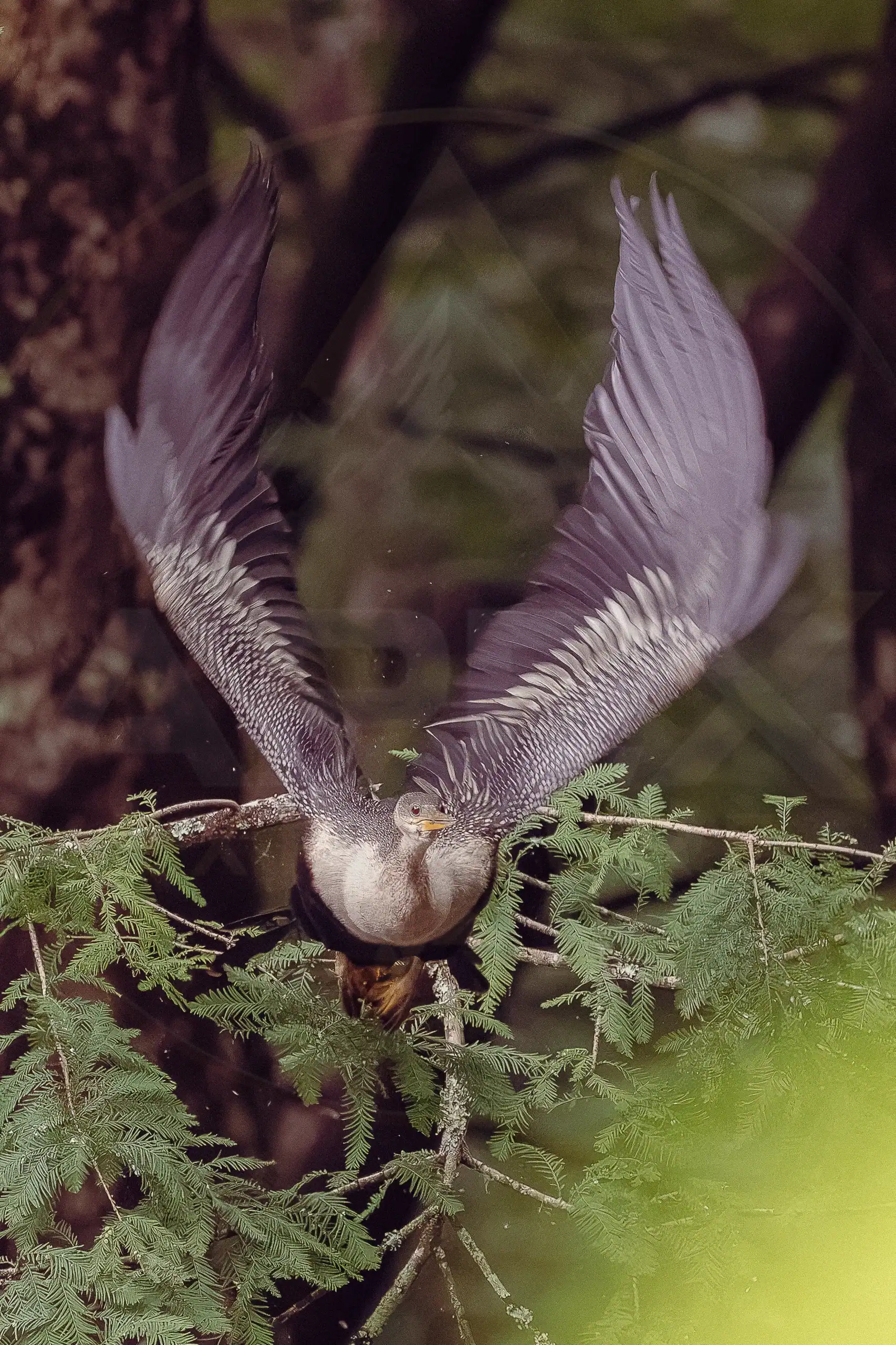
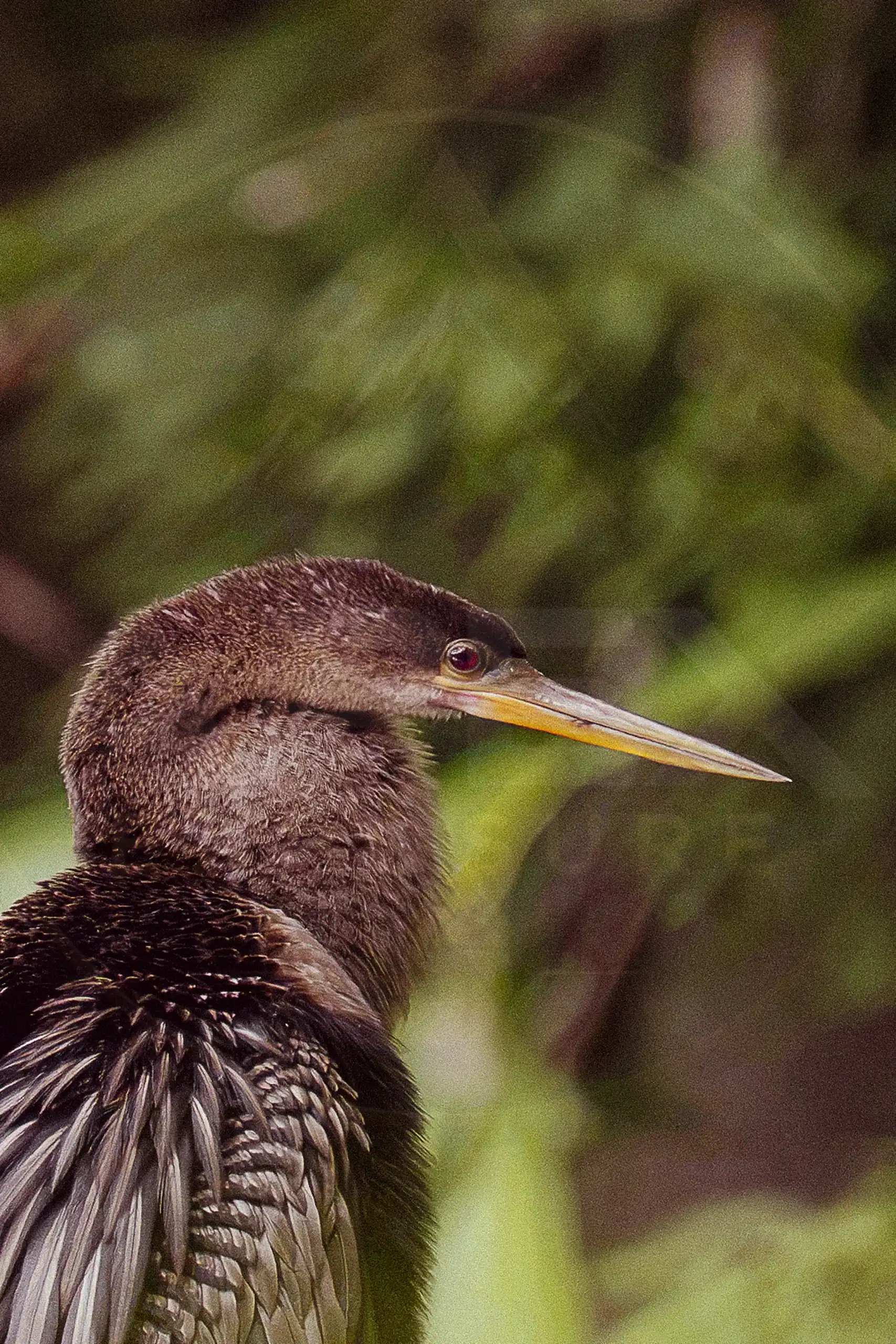
Because we had not built the outing around finding one particular animal, there was no pressure for the day to unfold in a certain way. We could pay attention to whatever Congaree offered. That included a Pileated Woodpecker moving among the larger trees, a much smaller Downy Woodpecker, and several small birds that appeared briefly before disappearing back into the vegetation. Near the water, we also encountered an Anhinga, giving us a different setting and visual rhythm from the forest scenes that made up much of the outing.
At another point along the route, we encountered feral hogs moving through the woods. The moment happened quickly, as wildlife encounters often do. There was little time to prepare or reposition, but that unpredictability was part of what we wanted this project to preserve. Not every encounter arrives with ideal light, a clear view, or enough warning to build the perfect shot. Sometimes the value is simply in being present when it happens.
The nine-banded armadillo became the defining encounter of the day.
We found it moving through the leaf litter beneath the canopy, gathering leaves and searching through the forest floor. Unlike some of the faster encounters, this one gave us time to stop, observe, and work with both cameras. The armadillo remained focused on what it was doing, allowing us to document its behavior without attempting to direct or interfere with it.
That moment represented exactly what we were trying to establish with Apex Exposure Media. We did not arrive knowing that an armadillo would become the centerpiece of the outing. There was no staged setup and no planned sequence. We happened to be in the right place, recognized the opportunity, and slowed down enough to let the encounter develop naturally.
This was also one of our first outings where the cameras captured usable environmental sound alongside the video. That changed the character of the finished film. Instead of relying entirely on music, we could preserve portions of the atmosphere that surrounded the encounters and combine those sounds with a curated score. The result became Wildlife Encounters in Congaree National Park | Cinematic Nature Film, a record of the broader experience rather than a film devoted to only one species.
The equipment served different purposes throughout the day. The Sony a6700 and 200-600mm lens provided the reach needed when wildlife remained farther away or when we wanted tighter compositions without moving closer. The Canon R7 and 100-400mm combination was lighter and easier to reposition while walking the boardwalk and trail. The tripod offered stability when there was time to establish a shot, while the monopod allowed us to react more quickly when an encounter was already unfolding.
More importantly, the outing helped us understand how photography and film could support one another. A still photograph can isolate a single expression, movement, or detail. Film can preserve the pace of the encounter, the surrounding environment, and the time between the obvious moments. Together, they create a more complete record of what it felt like to be there.
We left Congaree without any disappointment about what we had or had not found. The day did not need to produce a specific animal or a predetermined list of shots to be successful. Over three hours, the park gave us an armadillo, feral hogs, an Anhinga, woodpeckers, smaller forest birds, changing light, natural sound, and the experience of moving through one of South Carolina’s most distinctive landscapes.
The armadillo may be the encounter we remember most clearly, but it was the complete outing that mattered. The boardwalk, the River Trail, the heat beneath the canopy, the sudden movement in the trees, and the uncertainty of what might appear next all became part of the story. Congaree National Park was not simply another place where we photographed wildlife. It was where the new direction of Apex Exposure Media began to take shape: explore without forcing the outcome, document the entire experience, and allow the place and its wildlife to decide what the story becomes.
PHOTOGRAPHY FROM CONGAREE
The photographs from this outing document the wildlife, landscape, and quieter details we encountered along the boardwalk and River Trail. Rather than trying to represent every species we saw, this collection focuses on the moments we were able to preserve through the cameras.

FEATURED FILM
Wildlife Encounters in Congaree National Park | Cinematic Nature Film
The completed film brings the full outing together through wildlife footage, natural sound captured in the field, and curated music. It follows our route through Congaree and preserves the encounters as they unfolded rather than presenting them as isolated clips.
Filmed and edited by Heath for Apex Exposure Media.
- Date: July 13, 2026
- Location: Congaree National Park, South Carolina
- Route: Boardwalk to River Trail, returning by the boardwalk
- Time in the Field: Approximately three hours
- Conditions: Sunny, hot, and humid
- Equipment: Sony a6700 with Sony FE 200-600mm lens; Canon EOS R7 with Canon RF 100-400mm lens; tripod and monopod; in-camera environmental audio
Frequently Asked Questions
What wildlife did we encounter at Congaree National Park?
During the three-hour outing, we encountered a nine-banded armadillo, feral hogs, an Anhinga, a Pileated Woodpecker, a Downy Woodpecker, and several smaller forest birds.
What was the most memorable wildlife encounter?
A nine-banded armadillo gathering leaves and foraging through the forest floor beneath the canopy.
What route did we follow through Congaree National Park?
We followed the elevated boardwalk to the River Trail, then returned to the boardwalk and exited the park.
What camera equipment did we use?
We used a Sony a6700 with a Sony FE 200-600mm lens and a Canon EOS R7 with a Canon RF 100-400mm lens, along with one tripod and one monopod.
Is there a film from this adventure?
Yes. Wildlife Encounters in Congaree National Park | Cinematic Nature Film combines original wildlife footage, natural audio captured in the field, and curated music from the outing.