
SPECIES INDEX
Muscovy Duck
Cairina moschata
Identification
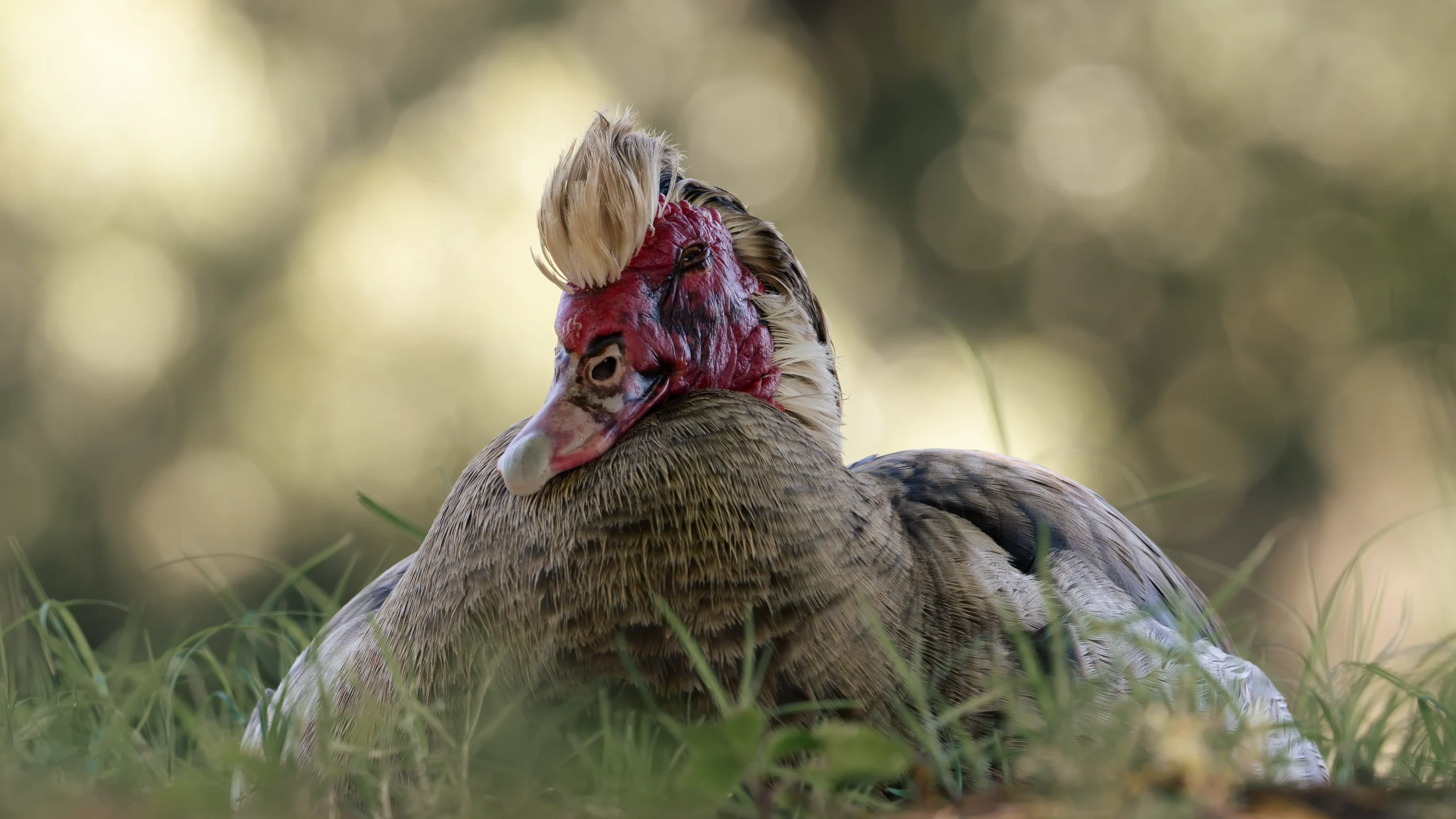
A large, distinctive duck best known for the red, warty facial skin (caruncles) around its eyes and the base of its bill — most pronounced in males. Body plumage is typically black with an iridescent green sheen in wild-type birds, though feral and domestic populations in the U.S. show a lot of variation, from all-white to pied black-and-white. Both sexes carry a low crest of head feathers that can be raised, and males are noticeably larger than females.
Behavior
Unlike most ducks, Muscovies are strong perchers, using sharp claws to grip branches and roost in trees. They’re also largely silent — rather than quacking, they communicate with soft hisses and huffing, puffing sounds.
Habitat & Range
The Muscovy duck is native to Mexico and Central and South America, favoring wooded wetlands, rivers, and ponds. The birds found in South Carolina and much of the rest of the U.S. are part of a widespread feral population, descended from domesticated stock and now established around parks, farms, and urban ponds well outside the species’ native range.
Diet & Foraging
An opportunistic omnivore, foraging both in water and on land for aquatic plants, seeds, small fish, insects, and amphibians. Muscovies graze readily on grass and other vegetation, more so than many other duck species.
Nesting & Reproduction
In the wild, Muscovies nest in tree cavities; feral populations will also nest on the ground in dense cover. Clutches are large, often 8–16 eggs. The species is the sole wild ancestor of the domestic Muscovy duck breed — a genetically distinct line from the Mallard-derived breeds like the Pekin.
Conservation Status
Native, wild Muscovy duck populations in Latin America are listed as Least Concern. The feral populations established in the U.S. and South Carolina, however, are considered non-native, and in some states are actively discouraged from establishing due to competition with native waterfowl.
Photographed by Apex Exposure Media
Locations Documented
Apex Exposure Media has documented the Muscovy duck at the following location(s). This list will grow as new sightings are added.
- Gibson Pond Road, Lexington, South Carolina — resting low in the grass.