
SPECIES INDEX
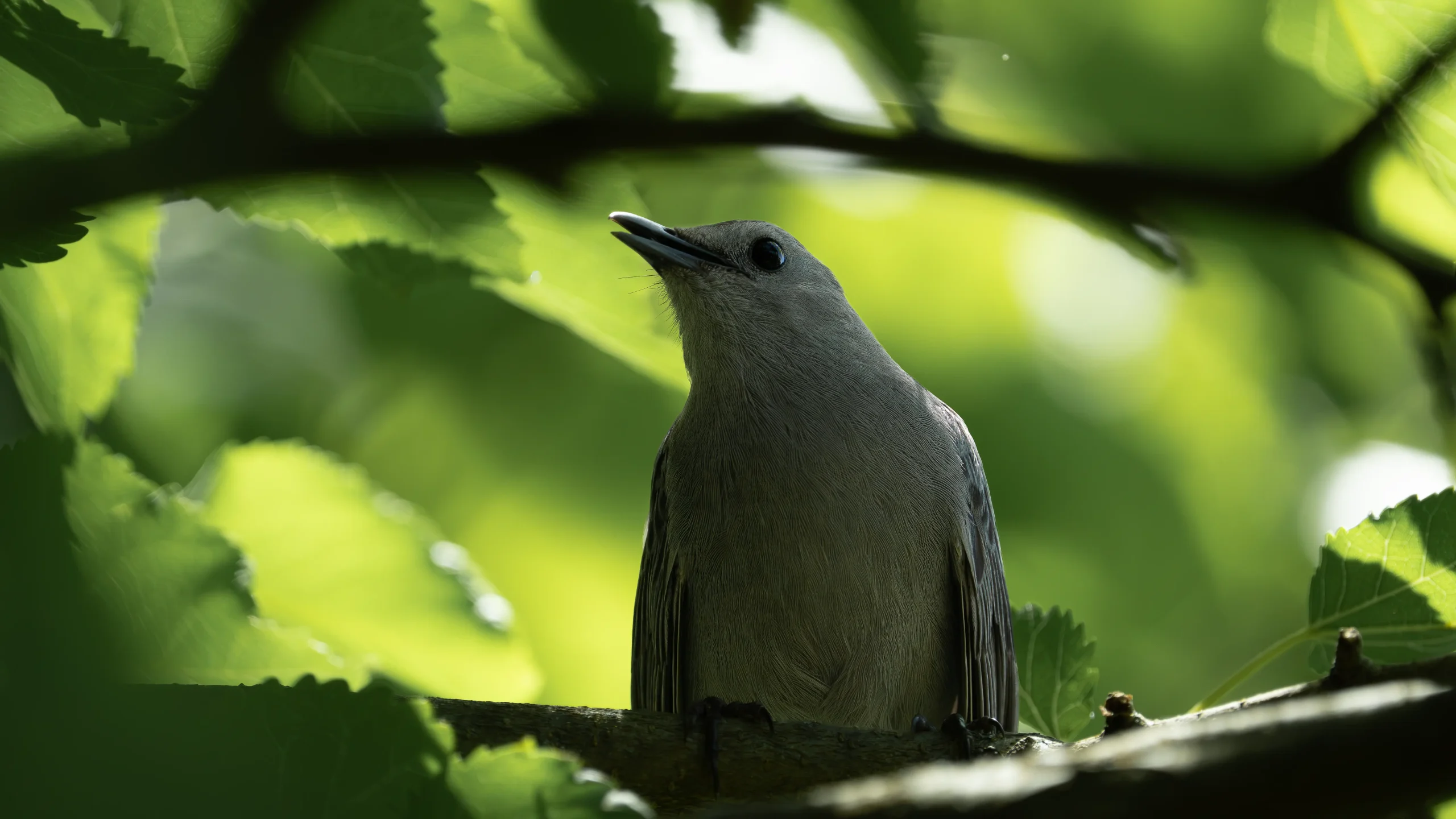
Gray Catbird
Dumetella carolinensis
Identification
A slate-gray songbird with a neat black cap and a rust-colored patch tucked under the tail — subtle, but a reliable field mark once you know to look for it. The tail is often held cocked upward, similar to a wren.
Call
Named for its distinctive call — a raspy, mewing note that sounds remarkably like a cat. Catbirds are also talented mimics, in the same family as mockingbirds and thrashers, capable of stringing together long, varied phrases that include snippets borrowed from other birds’ songs.
Habitat & Range
A common summer resident across most of North America east of the Rockies, favoring dense shrubs, thickets, and forest edges close to the ground. It’s migratory, wintering in the southeastern U.S., the Caribbean, and Central America.
Diet & Foraging
Catbirds forage low in dense cover for insects and berries, favoring the tangled understory over open ground.
Nesting & Reproduction
Builds a bulky, well-hidden cup nest in dense shrubs or thickets, typically laying 3–4 eggs. Notably, gray catbirds are one of the few songbirds known to recognize and eject the eggs of brood-parasitic cowbirds from their nest rather than raising the imposter’s chick.
Conservation Status
Listed as Least Concern by the IUCN, with a large and stable population widespread across its range.
Photographed by Apex Exposure Media
Locations Documented
Apex Exposure Media has documented the gray catbird at the following location(s). This list will grow as new sightings are added.
- Congaree National Park, South Carolina — perched low in dense cover beneath the canopy.