
SPECIES INDEX
Common Grackle
Quiscalus quiscula
Identification
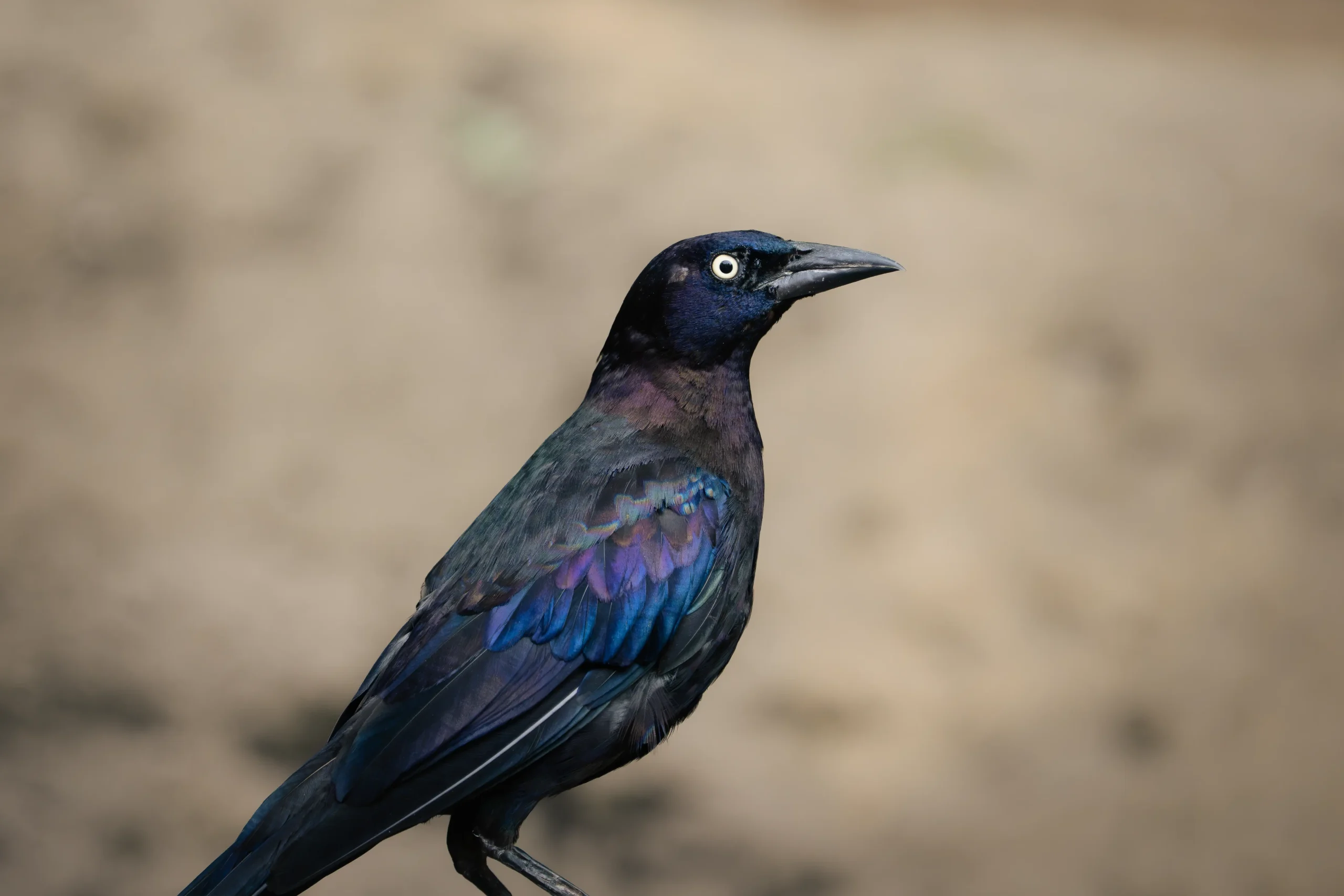
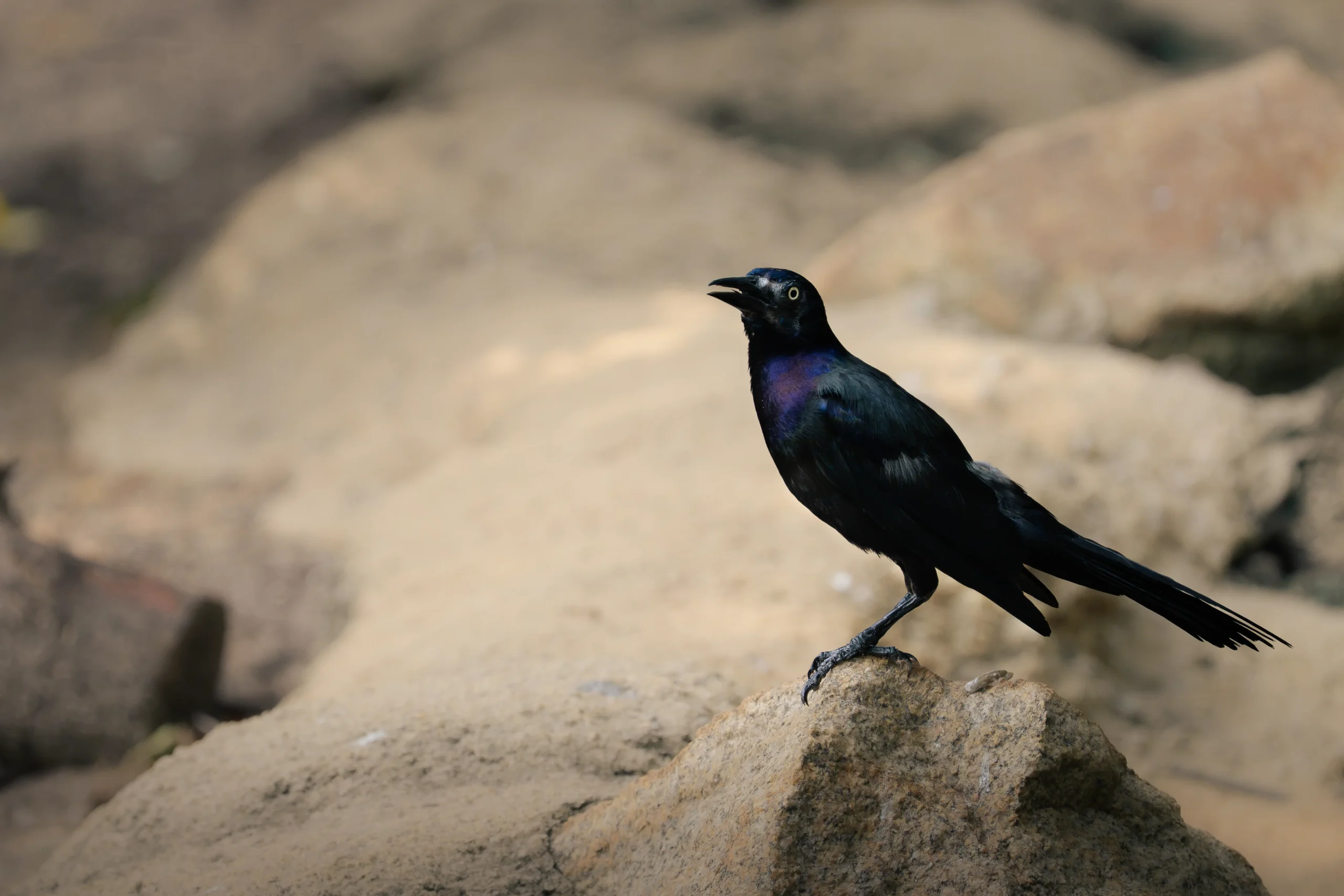
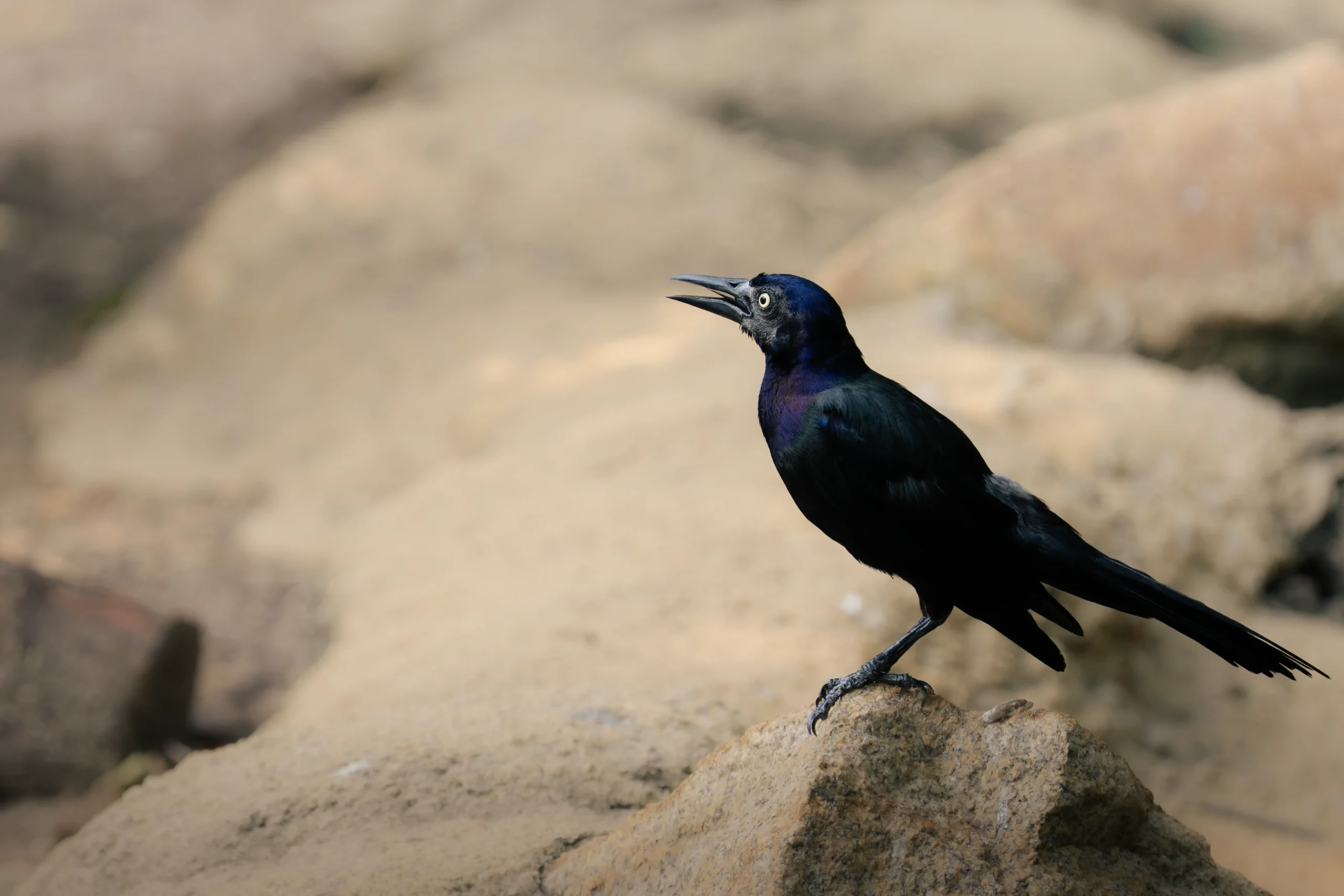
A large blackbird with a long, keel-shaped tail — noticeably V-shaped in cross-section, especially obvious in flight — and pale yellow eyes that stand out against dark plumage. At a distance it can look uniformly black, but in good light its feathers reveal an iridescent sheen of blue, purple, bronze, and teal, one of the more striking examples of structural color in a bird otherwise easy to overlook.
Call
Its most common call is a harsh, creaky “readle-eak,” often compared to the sound of a rusty gate hinge. Grackles also produce a range of chattering and whistling notes, especially in flocks.
Habitat & Range
Common grackles are found throughout most of North America east of the Rockies, including year-round across South Carolina. They’re highly adaptable and often found in open areas, agricultural fields, parks, and around people — including, in this case, the grounds of a wildlife park, where a genuinely wild bird showed up unbothered by the surrounding exhibits. Outside the breeding season, grackles form large flocks, sometimes joining mixed roosts with other blackbirds that can number in the millions during winter.
Diet & Foraging
Highly adaptable omnivores, foraging on the ground for insects, seeds, and grain, and opportunistically taking small vertebrates — occasionally including other birds’ eggs or nestlings — as well as scraps around human activity. Grackles typically walk rather than hop while foraging on the ground.
Nesting & Reproduction
Common grackles nest colonially, often in conifers or dense shrubs, sometimes near water. A typical clutch runs 4–5 eggs.
Conservation Status
Listed as Least Concern by the IUCN, and still numerous and widespread. That said, long-term surveys have documented a substantial population decline over recent decades — worth noting even for a species this common, since “widespread today” and “stable population trend” aren’t always the same thing.
Photographed by Apex Exposure Media
Locations Documented
Apex Exposure Media has documented the common grackle at the following location(s). This list will grow as new sightings are added.
- Riverbanks Zoo, Columbia, South Carolina — a wild bird encountered on the grounds rather than one of the zoo’s exhibited animals.