
SPECIES INDEX
Turkey Vulture
Cathartes aura
Identification
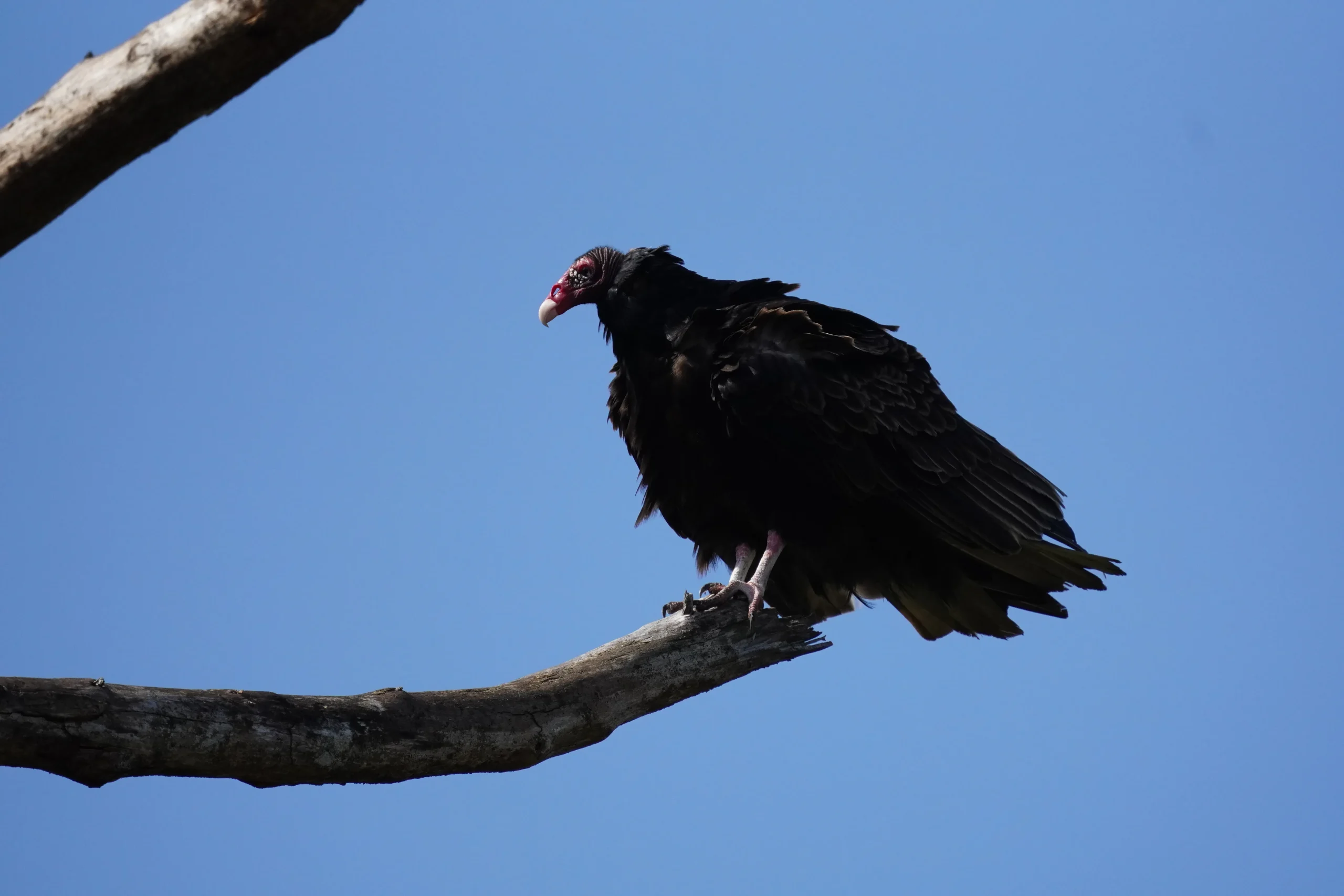
Easily recognized in flight by its wide wingspan, dark plumage, and a shallow V-shaped, teetering glide that covers long distances with barely a flap. Up close, adults show a bald, red head — a trait that helps keep feathers clean while feeding on carrion. From below in flight, silvery-gray flight feathers contrast noticeably against the otherwise black wing linings and body.
An Extraordinary Sense of Smell
Unlike most birds, which rely mainly on sight, turkey vultures locate food largely by smell — one of very few bird species known to hunt this way. They can detect the gasses given off by decaying carcasses from a considerable distance and altitude, allowing them to find carrion hidden under forest canopy that a purely visual hunter would miss entirely.
Habitat & Range
One of the most widespread scavenging birds in the Americas, ranging from southern Canada to the southern tip of South America. Common throughout South Carolina, frequently seen perched high in bare trees or circling on rising thermals while searching the ground below. Some northern populations migrate seasonally, while southeastern birds are typically year-round residents.
Diet & Ecological Role
An obligate scavenger, feeding almost entirely on carrion. Its stomach acid is remarkably strong — strong enough to safely digest diseased or badly decomposed meat that would sicken most other animals, effectively neutralizing many dangerous pathogens in the process. That makes turkey vultures a genuinely valuable part of the ecosystem, removing carcasses and disease from the landscape.
Defensive Behavior
When threatened, a turkey vulture will vomit its stomach contents — both to lighten itself for a fast escape and as a foul-smelling deterrent against predators. It also practices urohidrosis, urinating directly onto its own legs to cool down in the heat, which is thought to help kill bacteria picked up while feeding.
Nesting & Reproduction
Turkey vultures don’t build a nest. Eggs — usually a clutch of 1–3 — are laid directly on the ground in a sheltered spot: a cave, hollow log, dense thicket, or abandoned building.
Conservation Status
Listed as Least Concern, with a large, widespread, and stable-to-increasing population across its range.
Photographed by Apex Exposure Media
Locations Documented
Apex Exposure Media has documented the turkey vulture at the following location(s). This list will grow as new sightings are added.
- Gaston, South Carolina — perched high in a bare tree.