
SPECIES INDEX
How Do Ospreys Catch Fish From the Air?
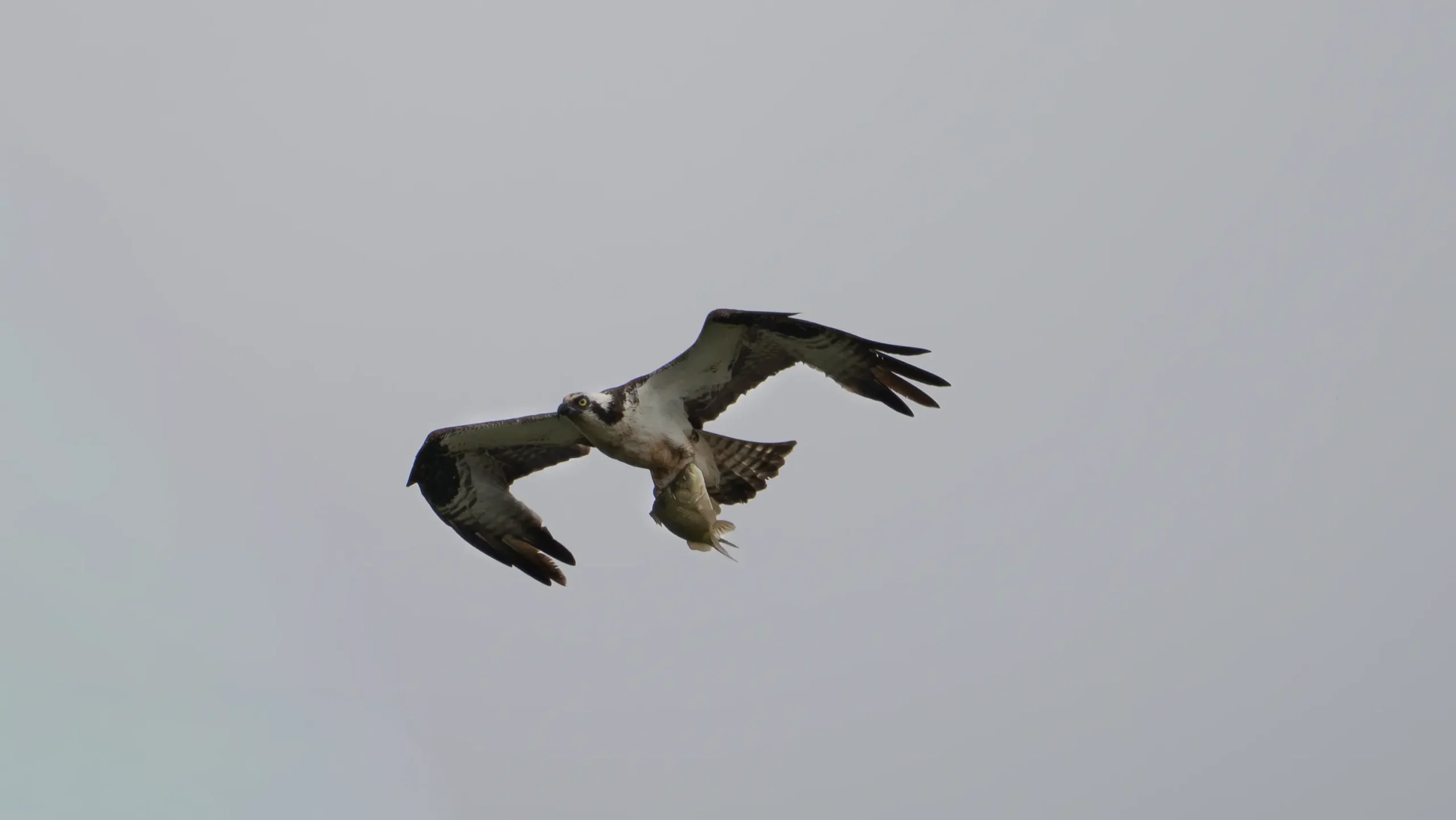
Ospreys hunt by soaring high over open water, then folding into a steep, feet-first dive the instant they spot a fish — striking with reversible outer toes and barbed foot pads that lock onto slick, wriggling prey. We watched one pull it off at Saluda Riverwalk, flying off with a fish gripped tight in its talons after a clean strike over the rapids.
Identification
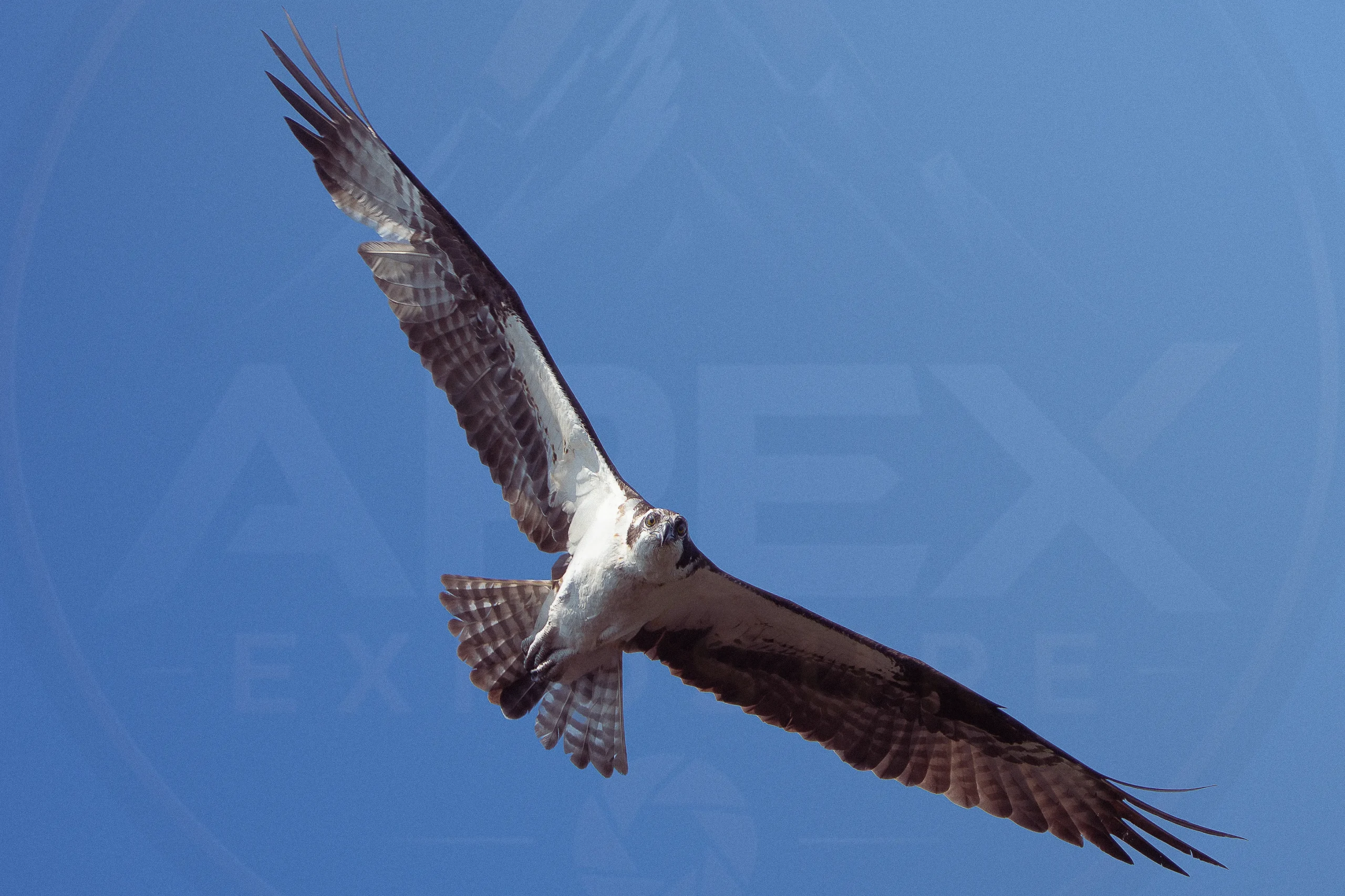
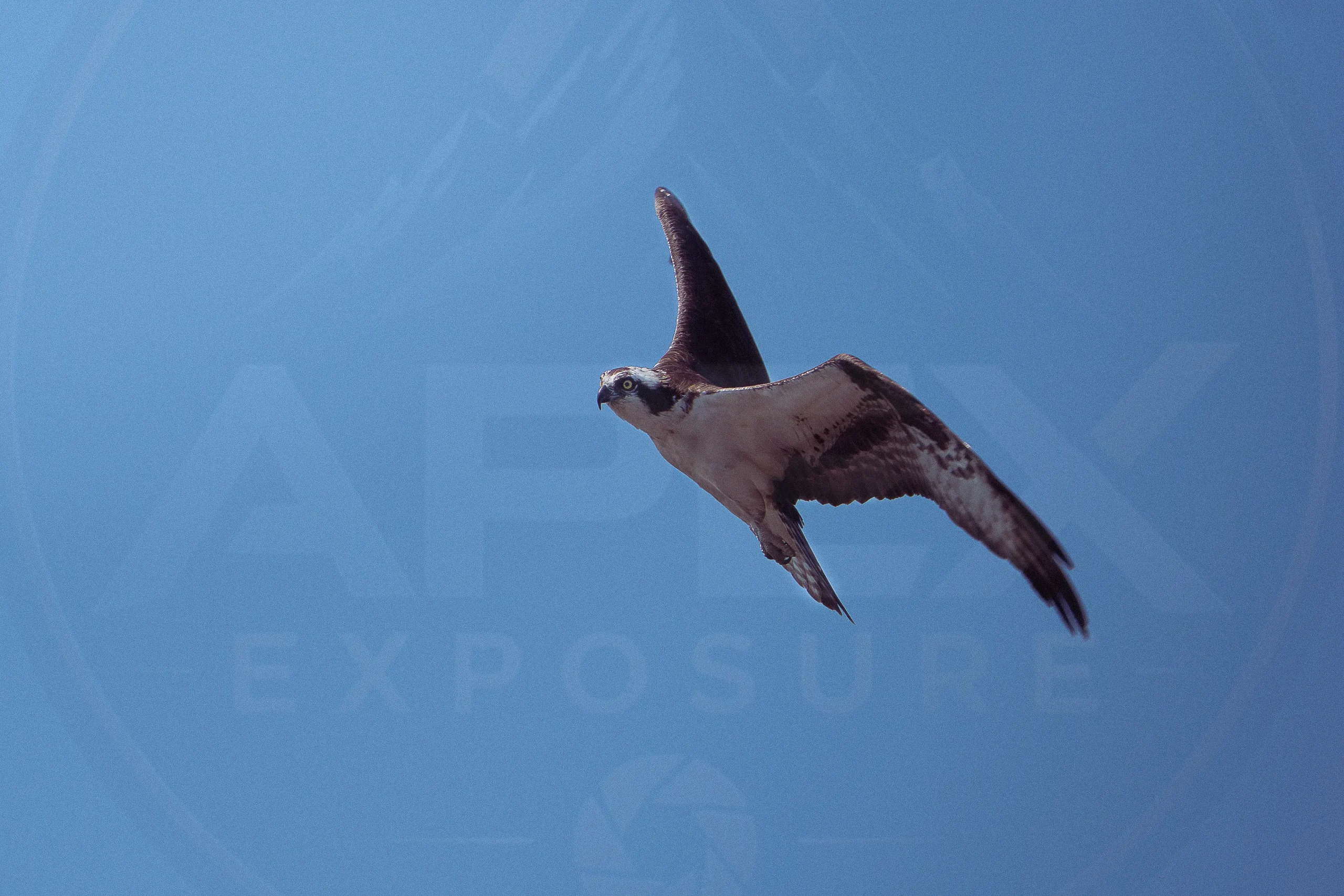
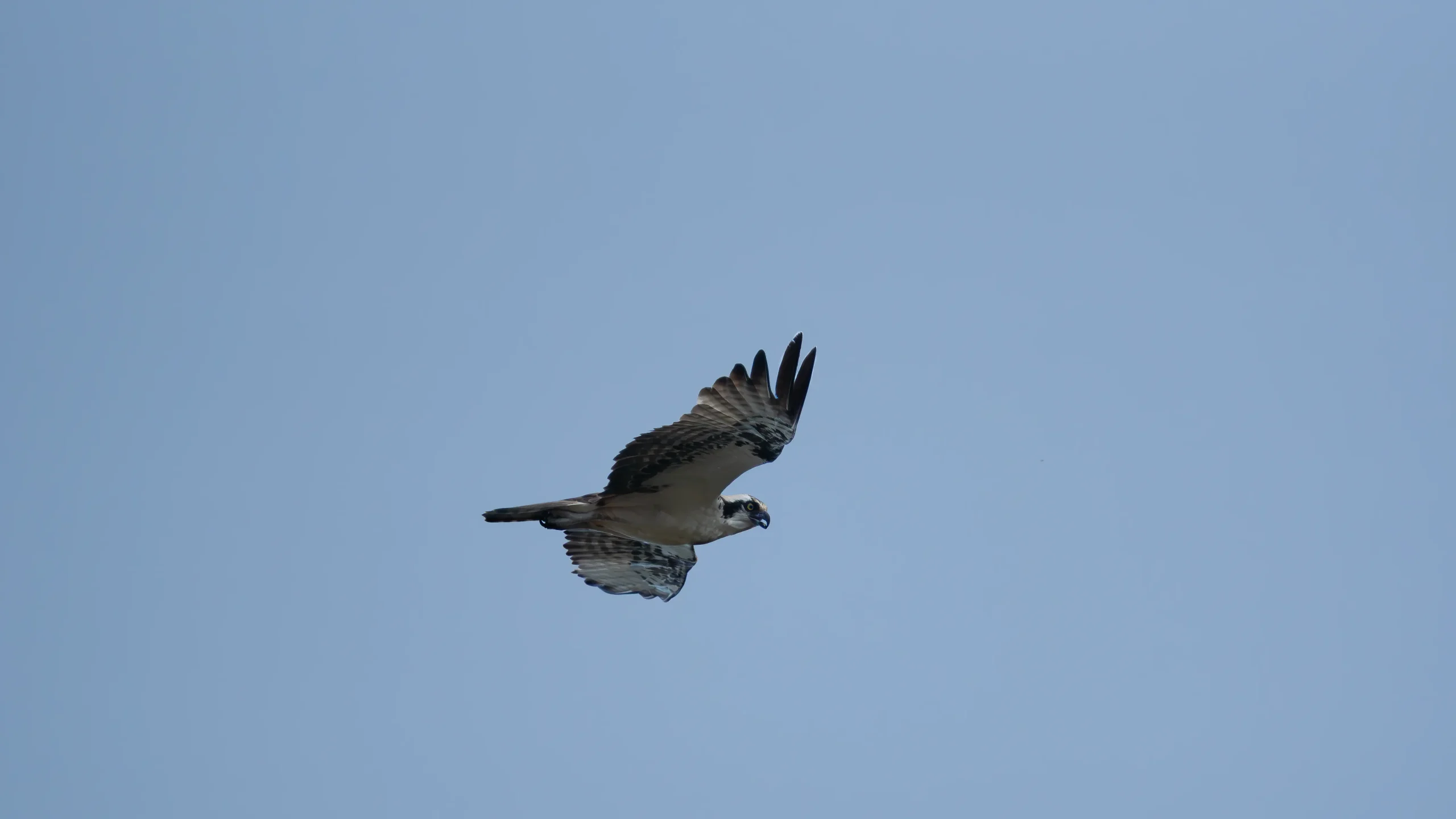
A large raptor, 20–26 inches long with a wingspan up to 6 feet, brown above and mostly white below, with a white head marked by a bold dark stripe through the eye. In flight, ospreys hold their wings in a distinctive crooked, “M”-shaped profile that separates them from eagles at a distance.
Call
A series of sharp, high-pitched whistles, often rendered as “cheep, cheep” or “yew k, yew k” — usually given near the nest or when defending territory from other raptors.
Habitat & Range
Ospreys are found on every continent except Antarctica, always near open water with a reliable fish supply — rivers, lakes, reservoirs, and coastlines. The Lower Saluda River at Saluda Riverwalk in Columbia, South Carolina, with its exposed rocks and clear rapids, is well-suited hunting ground, and we watched this one working the same stretch of water.
Diet & Hunting
Fish make up about 99% of the osprey’s diet, typically 5–10 ounces per catch. Hunting starts high in the air, scanning the water below with vision sharp enough to spot fish from up to 100 feet up; the bird then dives feet-first, adjusting its flight angle mid-descent to account for how light bends underwater. Waterproofed feathers and a clear third eyelid protect it through the plunge.
Nesting & Reproduction
Ospreys build enormous stick nests — heaps of driftwood, turf, and debris that can grow to nearly 300 pounds over years of reuse — typically set high on a dead tree, channel marker, or utility pole close to water. Pairs often return to the same nest site year after year.
Conservation Status
Listed as Least Concern by the IUCN Red List, with a global population estimated between 137,000 and 200,000 mature individuals and an increasing overall trend, following a strong recovery after DDT-era declines in the mid-20th century.
Photographed by Apex Exposure Media
Locations Documented
Apex Exposure Media has documented the osprey at the following location(s). This list will grow as new sightings are added.
- Saluda Riverwalk, Columbia, South Carolina — hunting and carrying a fish over the Lower Saluda River.