
SPECIES INDEX
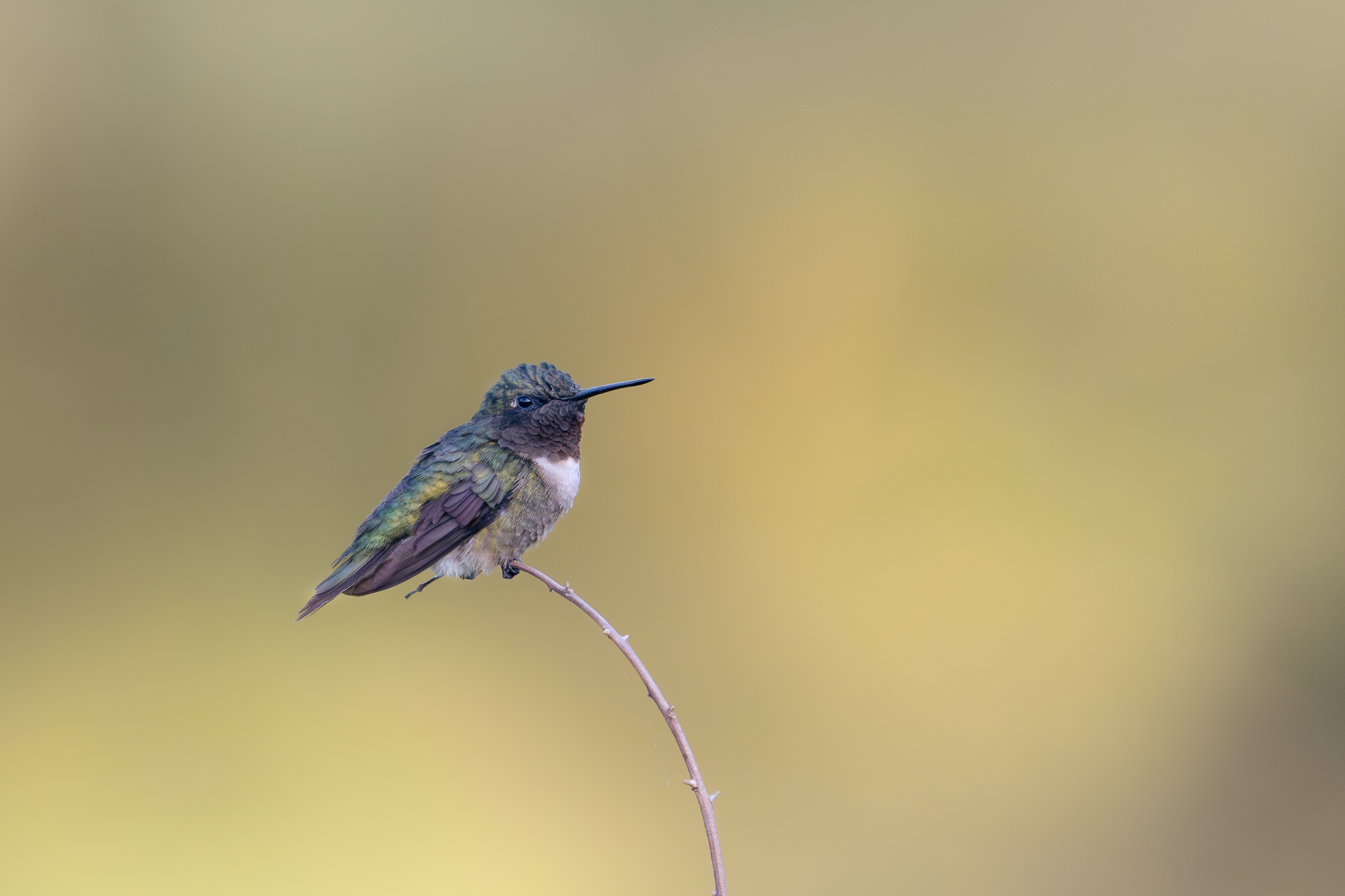
Ruby-Throated Hummingbird
Archilochus colubris
Identification
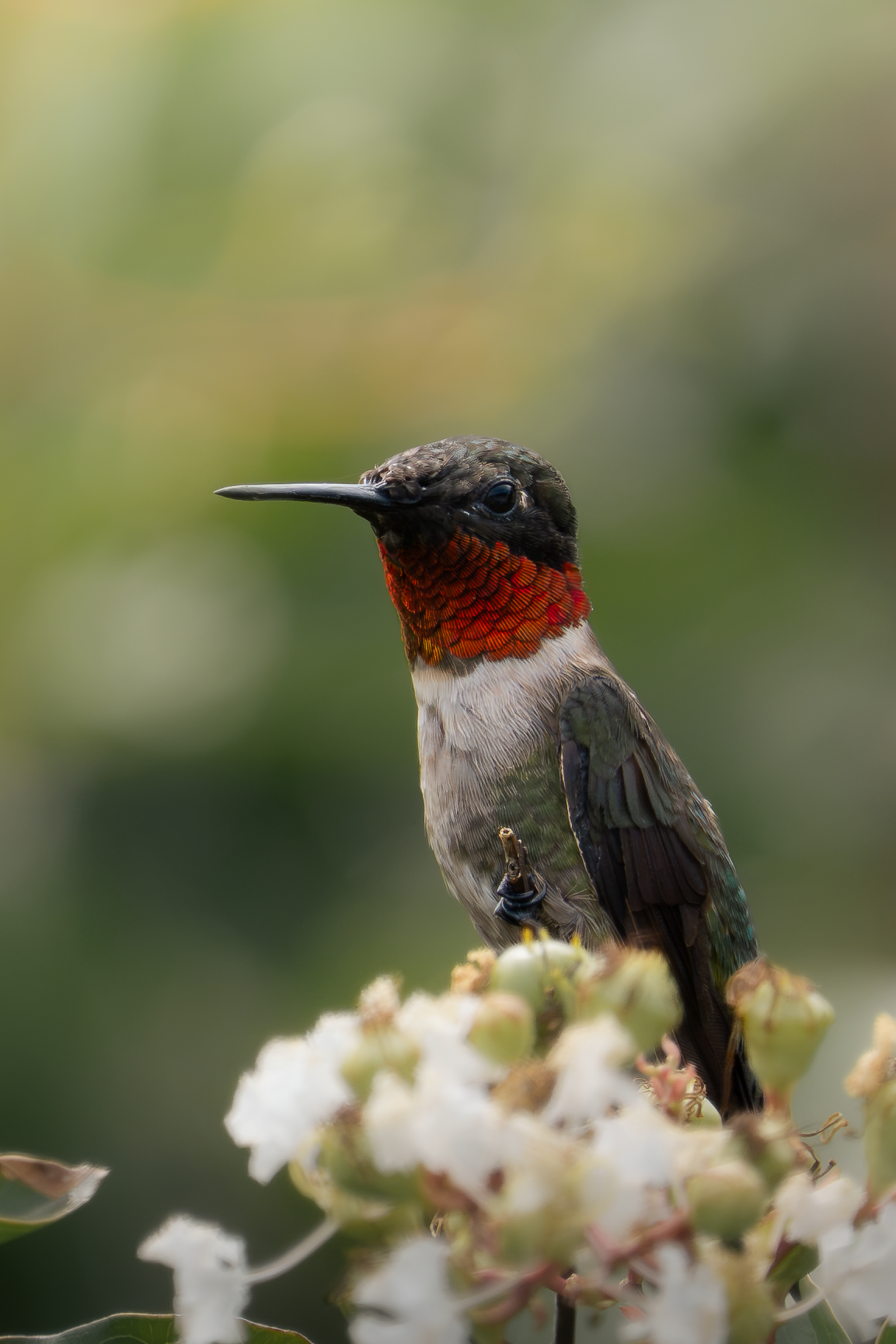
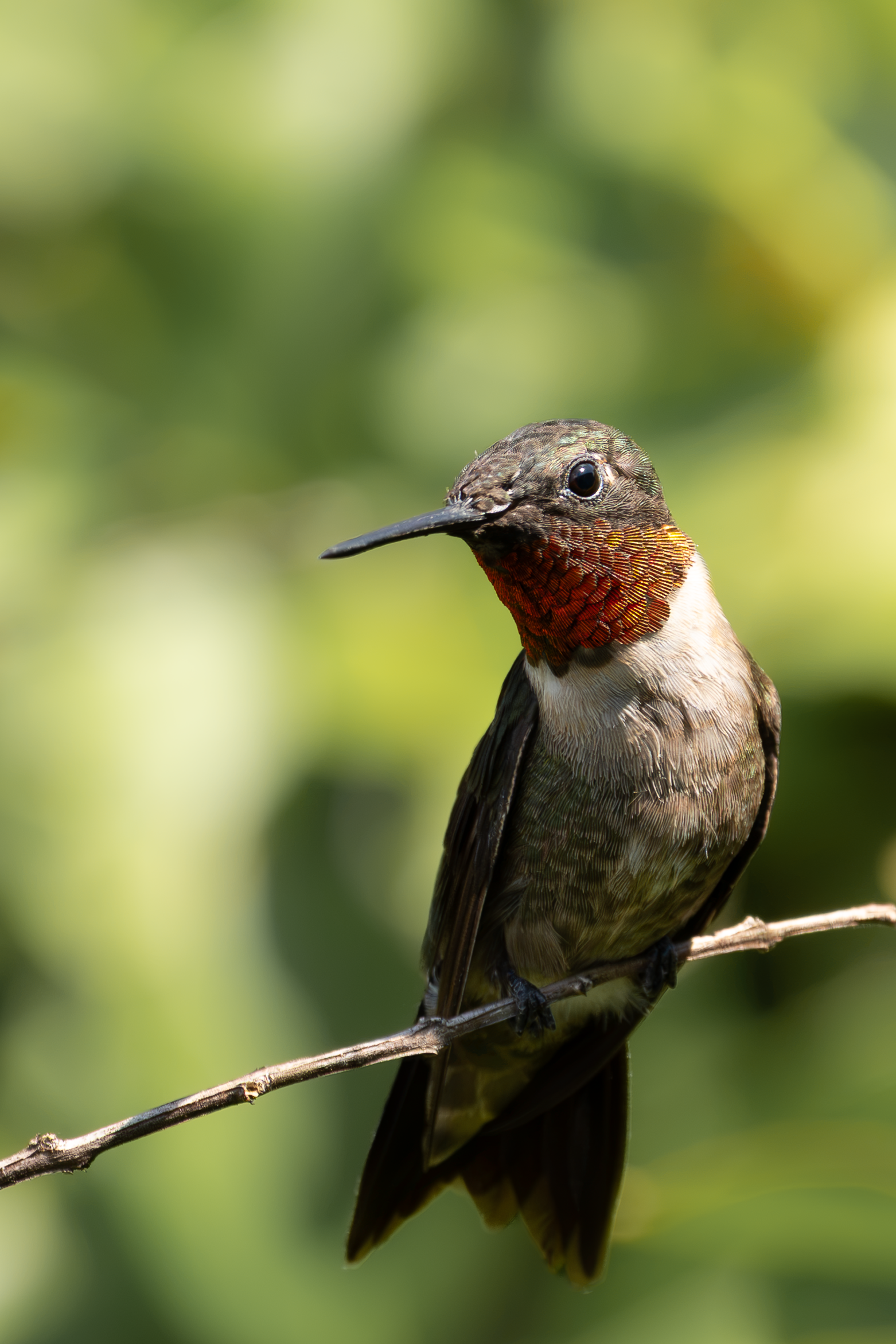
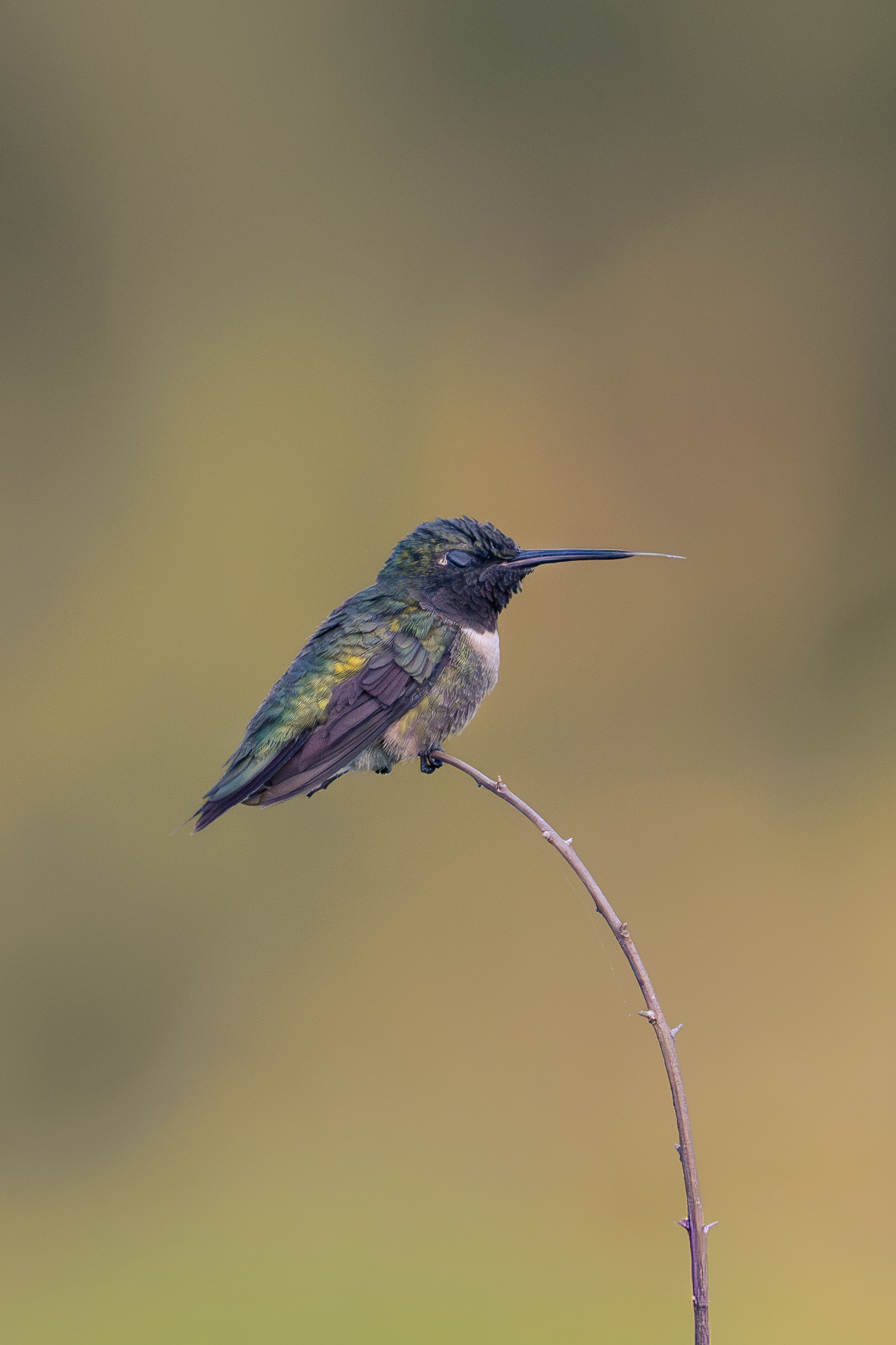
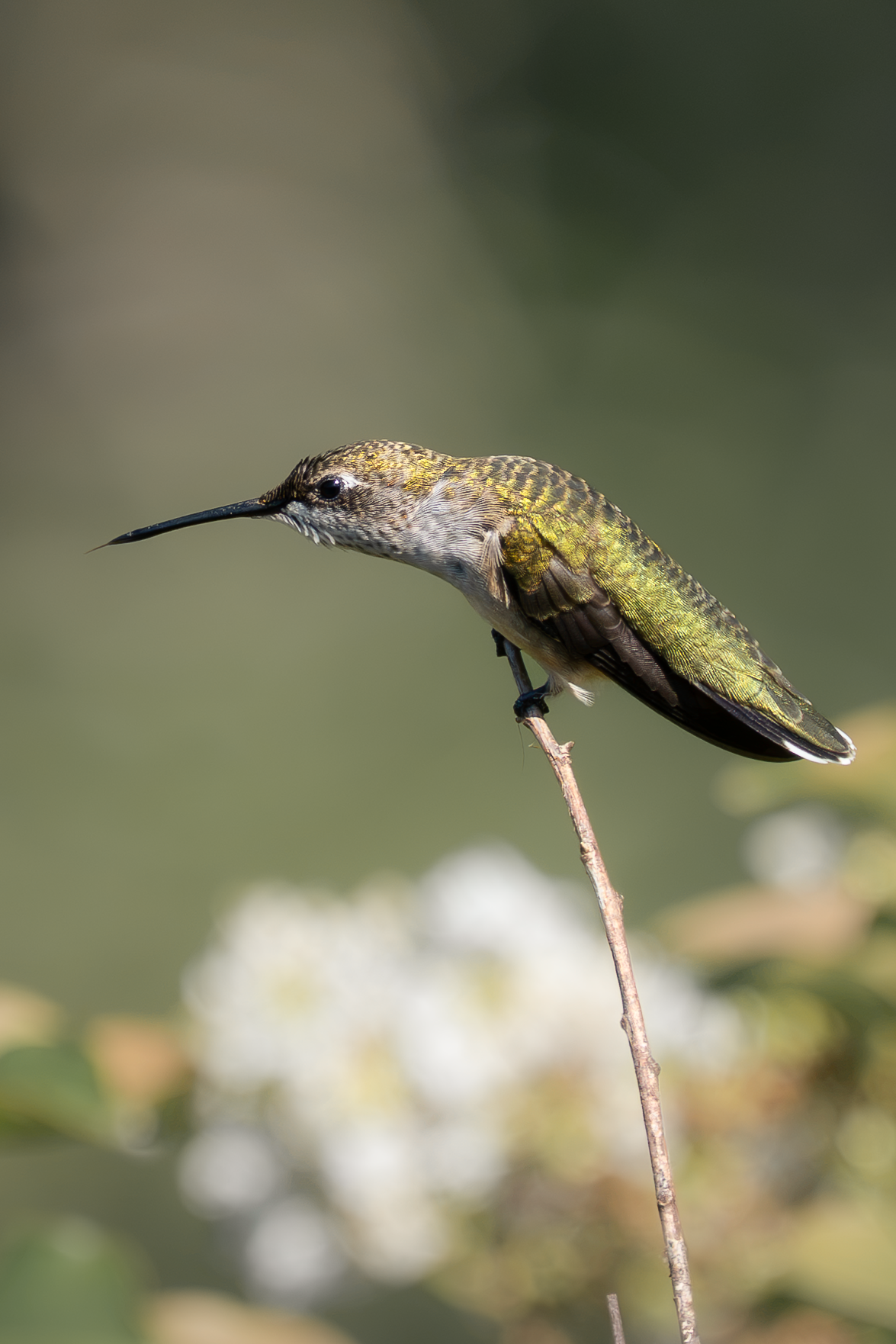
The smallest breeding bird in eastern North America, with an iridescent green back and a long, thin bill built for reaching deep into tubular flowers. Males carry the feature that gives the species its name: a brilliant iridescent red throat patch (the gorget) that can flash bright red in direct light and look nearly black from other angles. Females lack the red gorget entirely, showing a plain white throat instead.
During hovering, its wings beat as fast as 80 times per second — fast enough to let it hold perfectly still in the air and, uniquely among birds, fly backward on purpose, not just recover from a stall.
Sound
It doesn’t really sing. Vocalizations are limited to high, thin chip notes, and the sound most people associate with the species — the low hum it’s named for — comes from its wingbeats, not its voice.
Habitat & Range
Breeds throughout eastern North America, including all of South Carolina, wherever there’s a reliable supply of flowering plants — gardens, woodland edges, and meadows all work. It’s the only hummingbird species that regularly breeds east of the Great Plains.
It’s also a serious migrant for its size. Many ruby-throated hummingbirds cross the Gulf of Mexico in a single nonstop flight of roughly 500 miles during spring and fall migration, before wintering in Mexico and Central America.
Diet & Feeding
Nectar makes up most of the diet, drawn preferentially from red and orange tubular flowers, and drawn up through a long, forked tongue that works by a rapid pumping action rather than simple capillary action, as it was once assumed to work. Hummingbirds also need protein, especially while raising chicks, and will catch small insects and spiders to fill that gap.
Nesting & Reproduction
Females build a tiny cup nest from plant down and spider silk, saddled on a thin horizontal branch and camouflaged with lichen on the outside. The silk gives the nest some elasticity, letting it stretch as the chicks grow. A clutch is typically just 2 eggs, and males take no part in nest-building or chick-rearing after mating.
Conservation Status
Listed as Least Concern by the IUCN, with a large and generally stable population. As with many migratory pollinators, there’s ongoing concern about habitat loss along migration corridors and the risk of migration timing drifting out of sync with flower bloom times as the climate changes — not an immediate threat to the species, but a trend worth watching.
Photographed by Apex Exposure Media

Locations Documented
Apex Exposure Media has documented the ruby-throated hummingbird at the following location(s). This list will grow as new sightings are added.
- Spartanburg, South Carolina — photographed by Avery, perched and feeding.